In short
- A 4-hour jeep tour covers the classic stops near the village; a full day reaches Burdah and the remote south.
- Sunset from a dune or rock outcrop is the daily highlight.
- Guided hikes and climbs need a local guide licensed by the protected area.
Jeep tours: what each length covers
| Length | Typical stops | Suits |
|---|---|---|
| 2 h | Lawrence's Spring, red dunes, Khazali Canyon | Arrivals from Petra or Aqaba, sunset only |
| 4 h | + Little Bridge, Lawrence's House, Anfashieh inscriptions, mushroom rock | First-time visitors with one night |
| 6–8 h | + Um Fruth bridge, Burdah viewpoint, remote valleys, lunch in the desert | Two-night stays, photographers |
Book tours in Wadi RumLive times, prices and free cancellation terms on GetYourGuide.
Check availabilityKhazali Canyon and the rock art
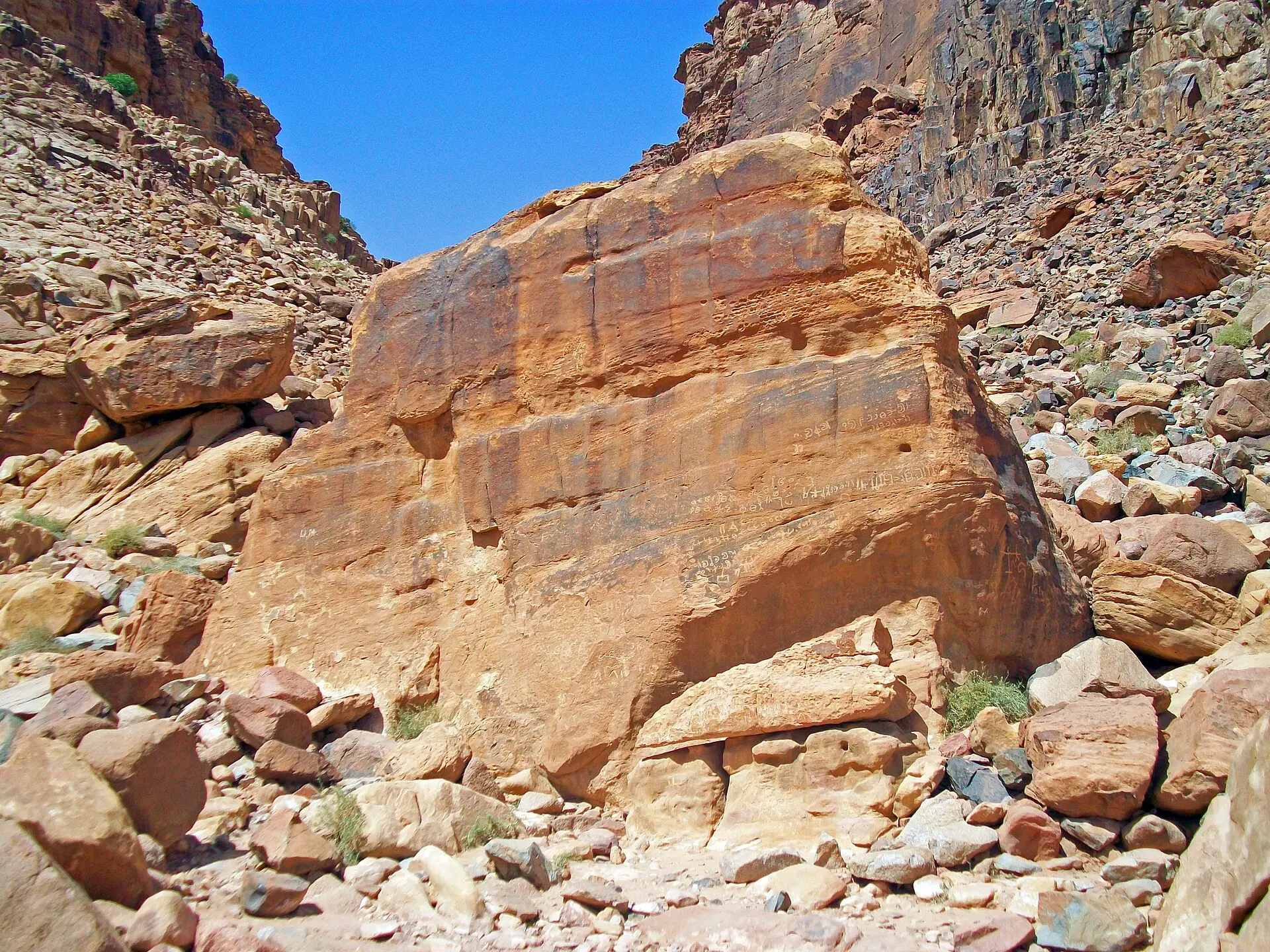
A narrow cleft in Jabal Khazali where Thamudic and Nabataean inscriptions and drawings of people and animals cover the walls. It is short — 10–15 minutes inside — but one of the best places to understand why UNESCO lists Wadi Rum as a cultural landscape. Do not touch the carvings.
Rock bridges: Um Fruth and Burdah
Um Fruth is a small arch you can scramble onto in a few minutes for photos. Burdah is the big one: a natural bridge high on Jabal Burdah reached by a 2–3 hour guided scramble with some exposure — only with a guide and a head for heights.
Dunes and sandboarding
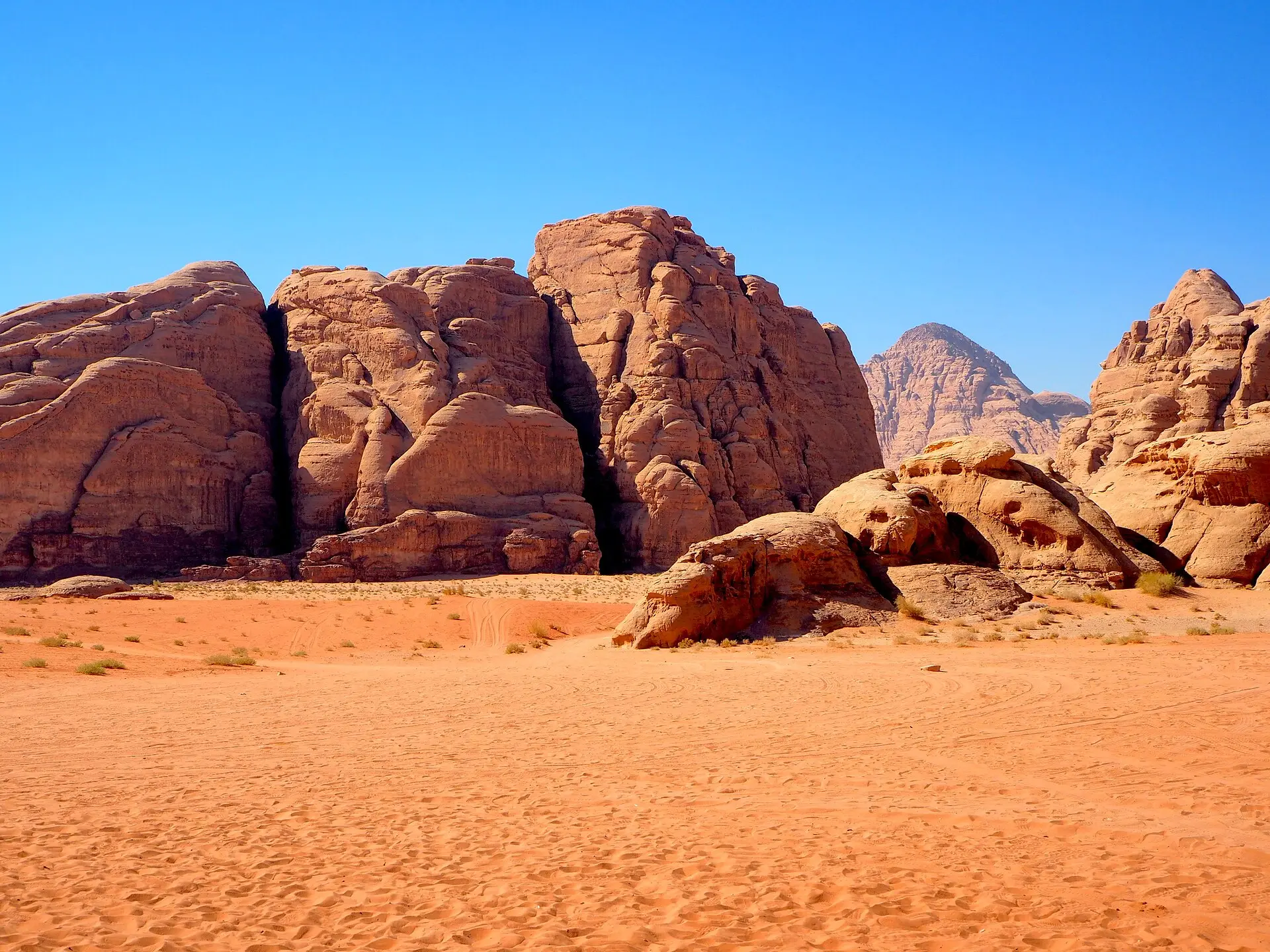
The red dune that leans against Jabal Umm Ulaydiyya is the most climbed; walk up barefoot in cool weather for the view. Some tours bring sandboards.
Camel rides and treks
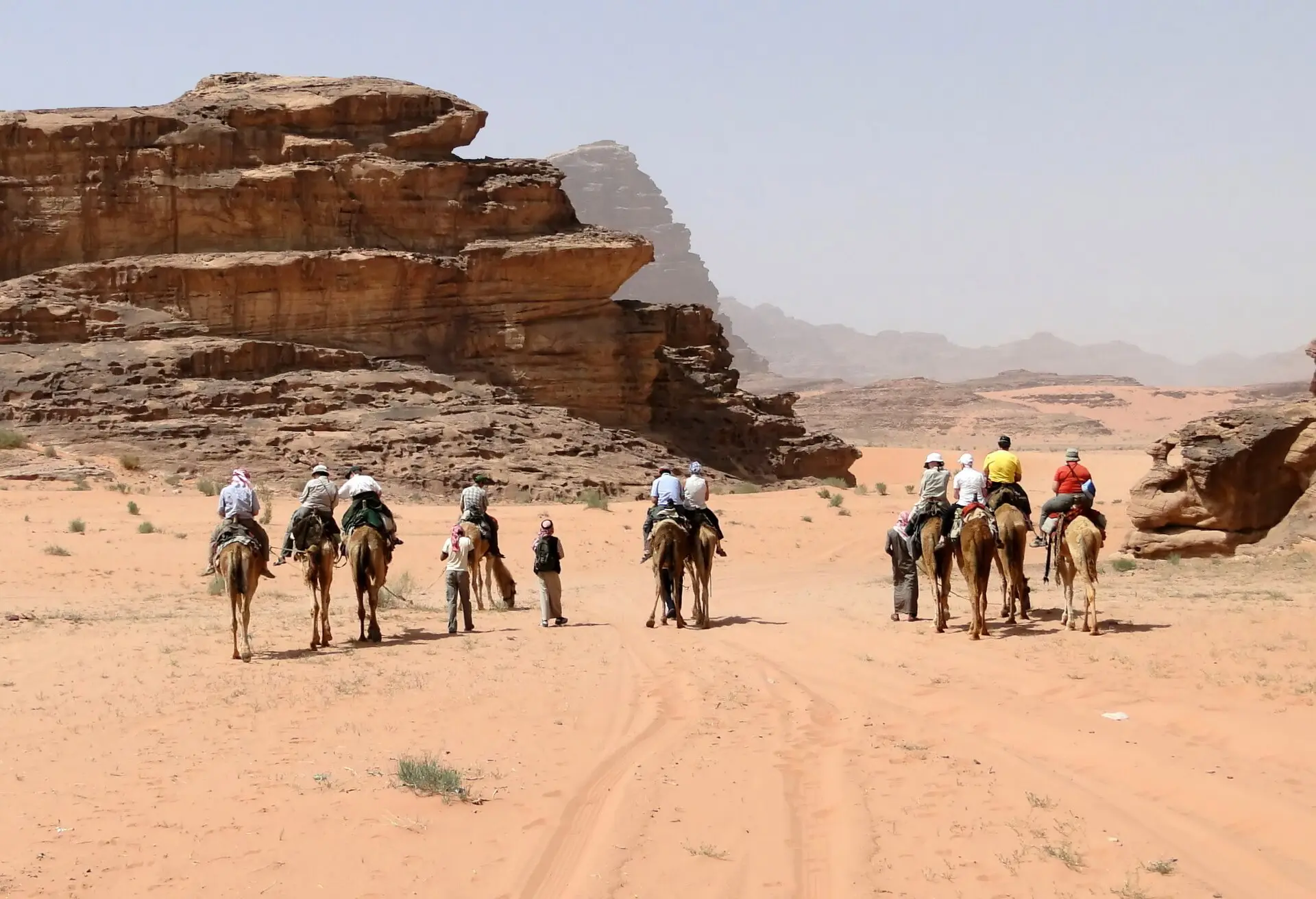
Camels were the desert's transport long before jeeps. One- or two-hour rides at sunset are easy to add; overnight camel treks with a Bedouin guide are a slower, more memorable way to cross the protected area.
Hiking, climbing and Jabal Umm ad Dami
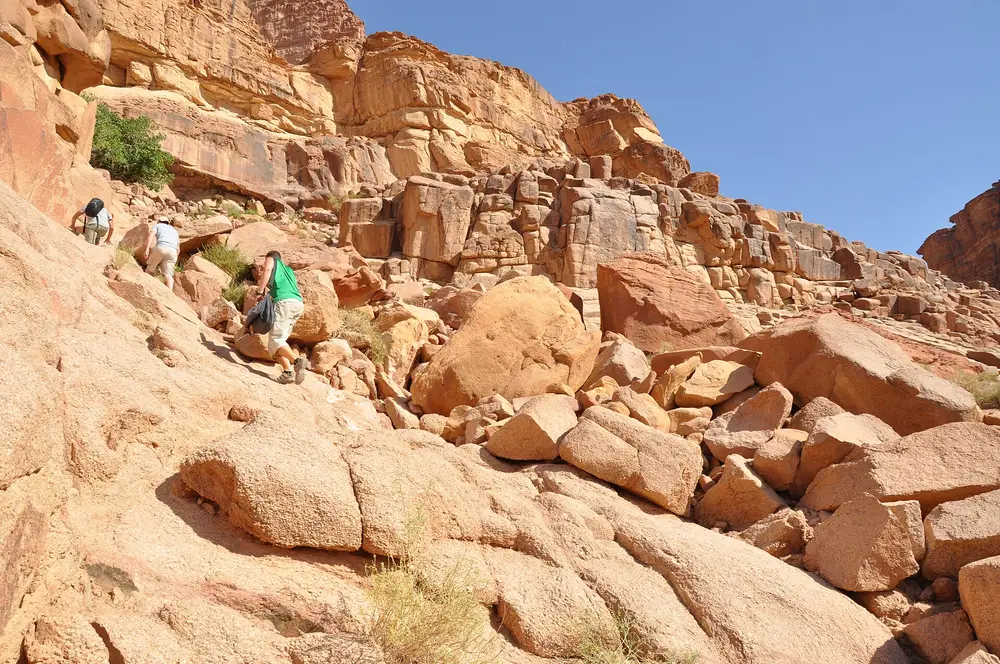
Wadi Rum has world-famous multi-pitch climbs on its sandstone walls and classic Bedouin scrambling routes. Jabal Umm ad Dami, close to the Saudi border in the south, is Jordan's highest summit (about 1,850 m) and a half-day guided hike with views across the border dunes. The final stage of the Jordan Trail runs from Rum village to the Red Sea at Aqaba.
Stargazing and night skies
With almost no light pollution, the Milky Way is visible on moonless nights. Bubble-dome camps make it easy, but any camp works: walk a few minutes away from the fire and let your eyes adjust for 15–20 minutes.
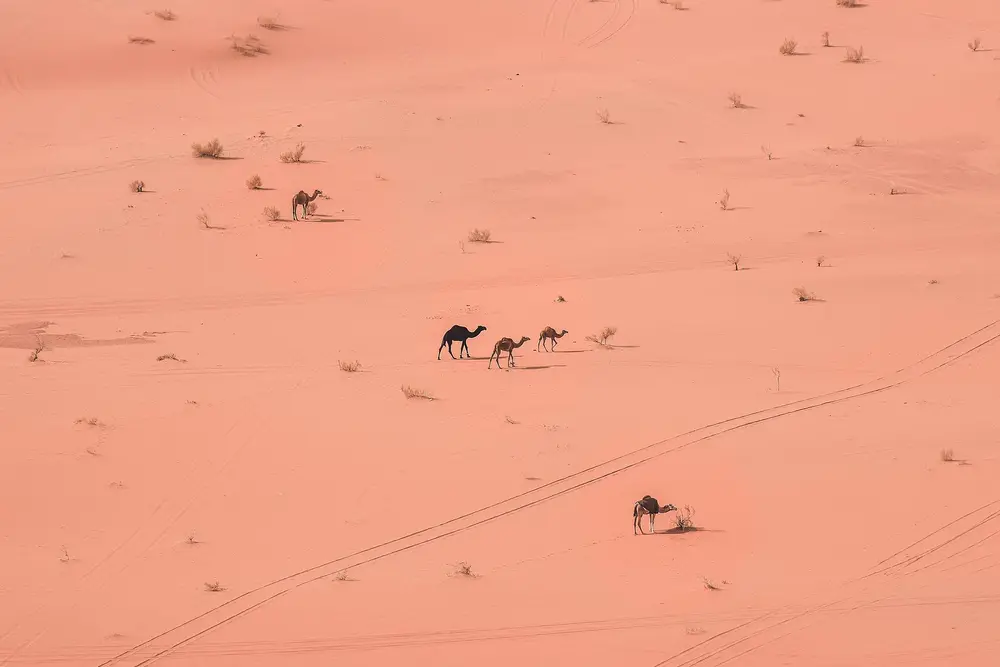
Wadi Rum: 9-hour jeep tour with camel ride, sandboarding and lunch
Full desert day mixing jeep, a short camel ride and sandboarding on the red dunes.
Check availabilityBook via GetYourGuide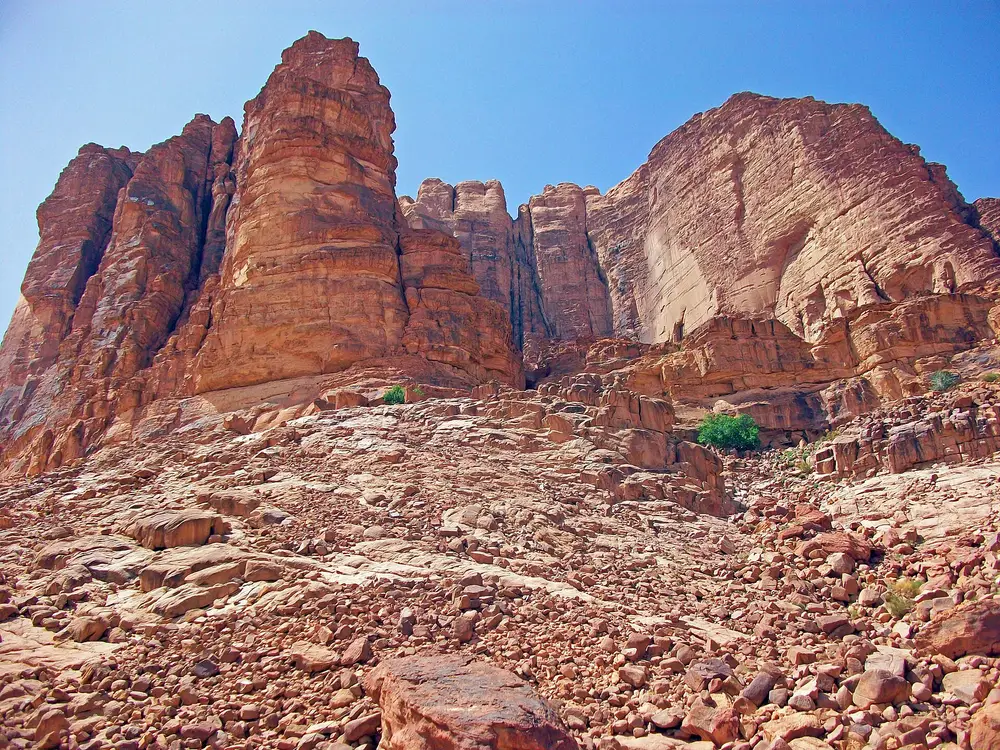
Wadi Rum: choose a 2- to 9-hour jeep tour
Flexible jeep tours from Wadi Rum village — pick the length that fits your plans, with guide and optional meal.
Check availabilityBook via GetYourGuide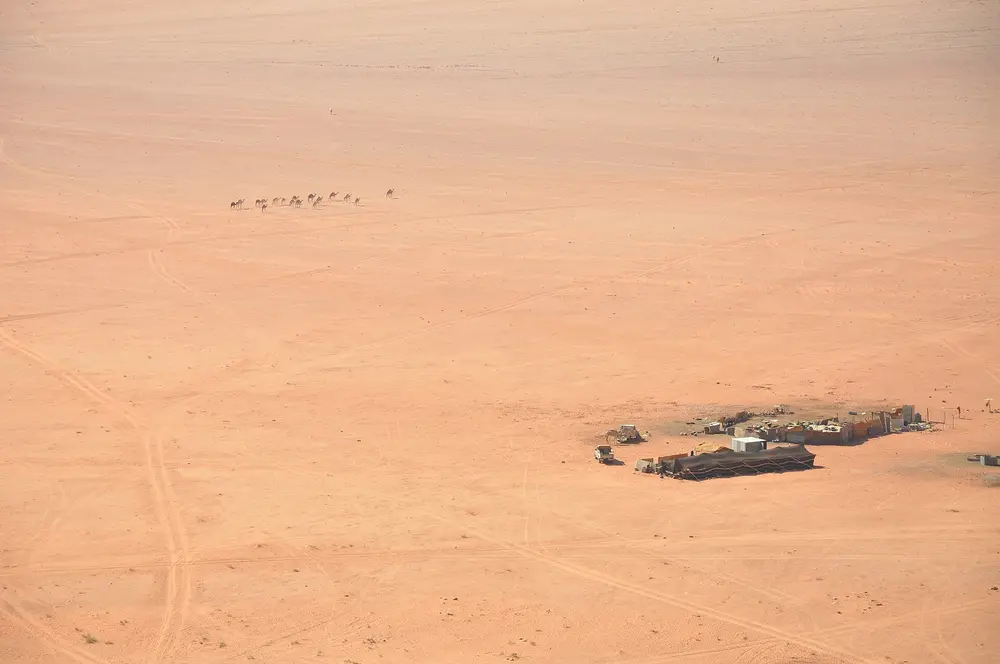
Wadi Rum: 1-night jeep tour with dinner and breakfast
An afternoon jeep tour, a night under the stars in camp, Bedouin dinner and breakfast.
Check availabilityBook via GetYourGuideTour listings are on GetYourGuide. Prices, times and cancellation terms are shown live on each listing and can change; JordanTravel.com may earn a commission at no extra cost to you.
Rum village, the Nabataean temple and the Visitor Centre
Before heading out, spend half an hour around Rum village. A short walk from the rest house leads to the remains of a Nabataean temple dedicated to the goddess Allat, built against the foot of Jabal Rum in the 1st century BC and later enlarged. The Visitor Centre, 7 km before the village, has a small exhibition on the geology, rock art and Bedouin culture of the protected area, with the Seven Pillars of Wisdom massif rising behind it — the classic first photo.
Rum village itself is a working Bedouin settlement of breeze-block houses, shops selling headscarves and water, and pick-up trucks. It is not pretty, but it is where your guide's family probably lives; buy supplies here, because there are no shops in the desert.
Sunrise and sunset
Every camp has a favourite sunset spot — a dune, a rock outcrop or a ridge — and your guide will time the last stop of the afternoon tour for it. In the softer light the sandstone turns from orange to deep red and then violet. Sunrise is quieter and colder: climb a rock near camp with a hot drink, watch the shadows retreat across the valleys and listen to the silence. Hot-air balloons usually take off at sunrise in the cooler months, weather permitting.
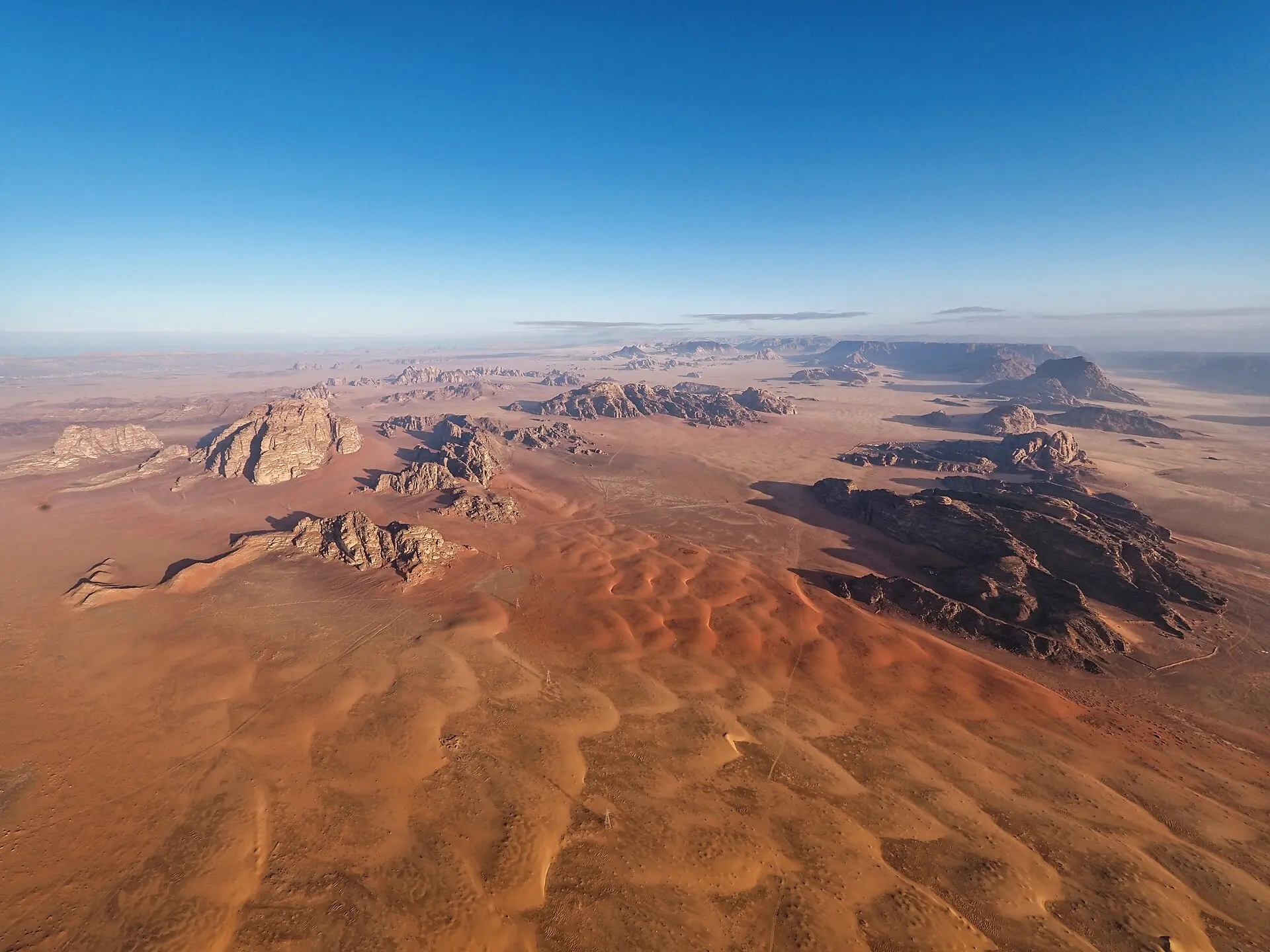
Desert food and Bedouin hospitality
Meals are part of the experience. Lunch on a full-day tour is usually cooked over a fire in the shade of a rock: tomatoes, onions and chicken or vegetables stewed in a pan, with flatbread and sweet tea. In camp, dinner is often zarb — chicken, lamb and vegetables lowered in a metal rack into a pit of hot coals under the sand and dug out a couple of hours later, tender and smoky. Vegetarians are catered for if you say so in advance.
Throughout the day you will be offered tea with sage or mint and bitter cardamom coffee. Accept it — it is the start of every conversation.
How to plan a day
| Time | Plan |
|---|---|
| 8–9 AM | Pick-up in Rum village; Lawrence's Spring and the first dune before the heat |
| 10 AM–12 PM | Khazali Canyon, Little Bridge, Anfashieh inscriptions |
| 12–2 PM | Lunch in the shade; rest |
| 2–4 PM | Um Fruth bridge, Burdah viewpoint, remote valleys |
| 4 PM–sunset | Sunset spot, then back to camp |
Responsible visiting
- Book with registered camps and guides from the local community; the protected area depends on tourism income for its Bedouin families.
- Do not climb on or touch inscriptions and petroglyphs; do not add your own.
- Ask your driver to stay on existing tracks — tyre marks scar the desert for years.
- Take your rubbish back to the village and avoid single-use plastic where you can.
- Camel and horse rides: choose operators whose animals look well cared for, and do not ride in the midday heat.
Frequently asked questions
Is a 2-hour jeep tour enough?
It shows you the nearest highlights and the sunset. For a real feel of the desert, choose at least 4 hours.
Can I hike in Wadi Rum without a guide?
Short walks near the village are fine, but routes inside the protected area — and anything involving scrambling — should be done with a local guide.
What should I wear in Wadi Rum?
Loose, modest clothes that cover shoulders and knees, closed shoes for scrambling, a hat and sunglasses, and a warm layer for the evening — nights are cold for most of the year.
Can I see Wadi Rum in a day from Petra or Aqaba?
Yes: a 4-hour jeep tour fits easily into a day trip from Aqaba, or between Petra and Aqaba. But a night in camp is the highlight.
Sources and official information
Facts were checked against these official sources in November 2026. Opening hours, prices and timetables change, so confirm before you go.
JordanTravel.com is an independent guide, not the official site of the Jordan Tourism Board, the Government of Jordan or any operator. Some links are affiliate links: tours go to GetYourGuide and hotels go to Booking.com, and we may earn a commission at no extra cost to you.