- Region
- Zarqa and Amman governorates
- How long
- 1 day (or 1 night in Azraq)
- Loop from Amman
- ≈ 250–300 km, a full day by car
- Azraq from Amman
- ≈ 100 km, 1.5 h
- UNESCO
- Qusayr Amra (1985); Umm el-Jimal (2024)
- Entry
- Amra, Kharana and Azraq included in the Jordan Pass
In short
- East of Amman, the 'desert castles' are mostly early Islamic (Umayyad) buildings of the 7th–8th centuries: hunting lodges, caravanserais, bathhouses and forts.
- Qusayr Amra, a small bathhouse covered in frescoes of hunting, bathing and the zodiac, is a UNESCO World Heritage Site.
- Qasr al-Azraq, built of black basalt beside an oasis, was T. E. Lawrence's headquarters in the winter of 1917–18.
- A loop by car from Amman covers Hallabat, Azraq, Amra and Kharana in one long day.
What the desert castles are
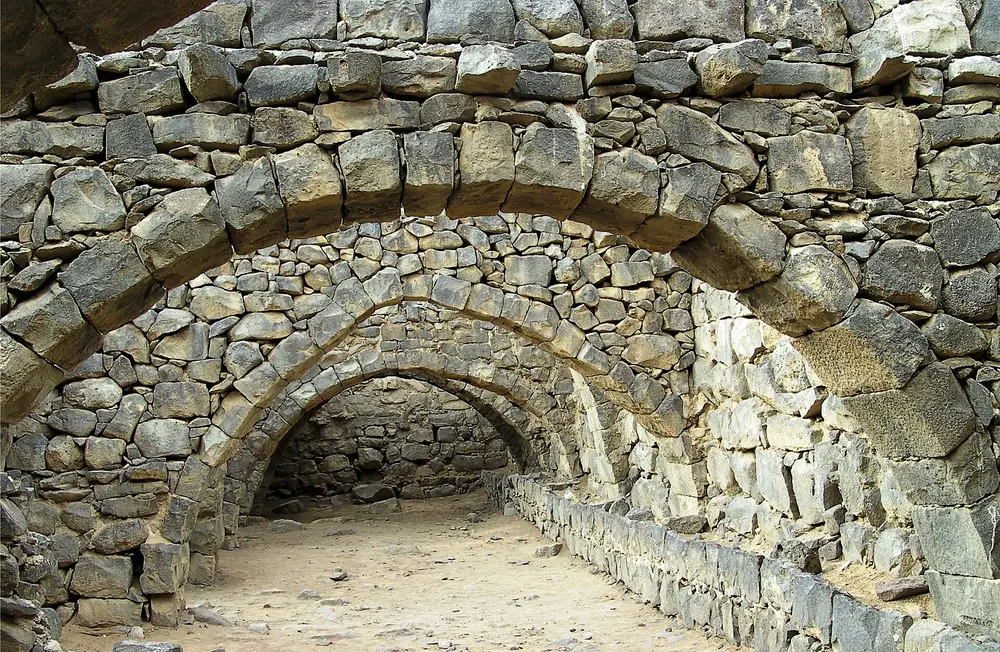
The Umayyad caliphs, ruling from Damascus between 661 and 750, built a string of residences in the semi-desert of the Badia. Some were farms and hunting retreats, some bathhouses with elaborate decoration, some way stations on trade routes; others reused Roman and Byzantine forts. 'Castle' (qasr) is a loose label — few were primarily military.
Today they make an unusual, off-the-beaten-track day from Amman through a flat, stony landscape that changes dramatically from the city's hills.
Book tours in Desert castlesLive times, prices and free cancellation terms on GetYourGuide.
Check availabilityQusayr Amra
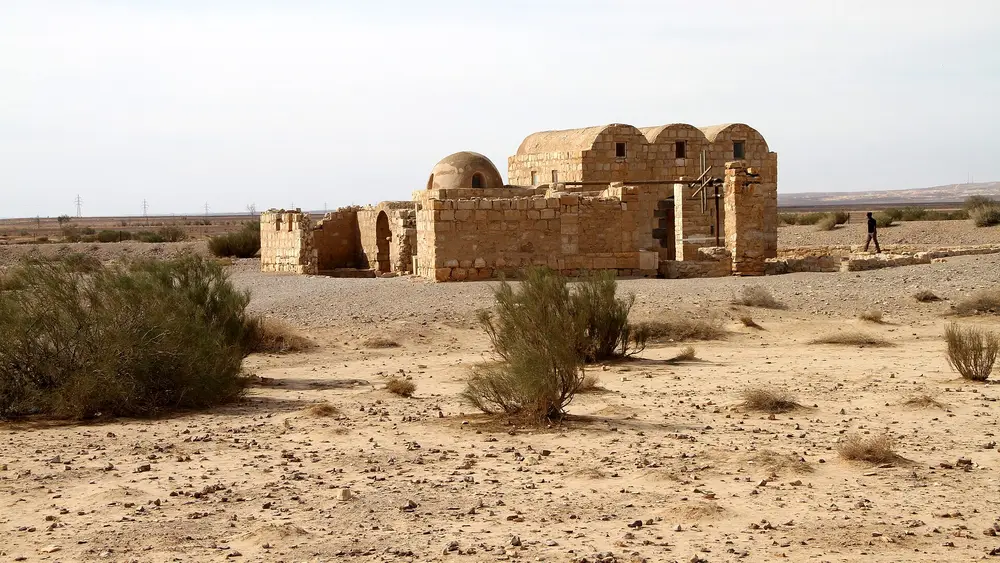
Built in the early 8th century, probably for the prince who became Caliph Walid II, this small stone bathhouse and audience hall is covered inside with remarkable frescoes: hunting scenes, musicians, bathing women, craftsmen at work, portraits of rulers and a domed ceiling painted with the zodiac — one of the earliest surviving representations of the night sky on a dome. UNESCO listed it in 1985, and restoration in the 2010s revealed the colours again. Allow 45 minutes.
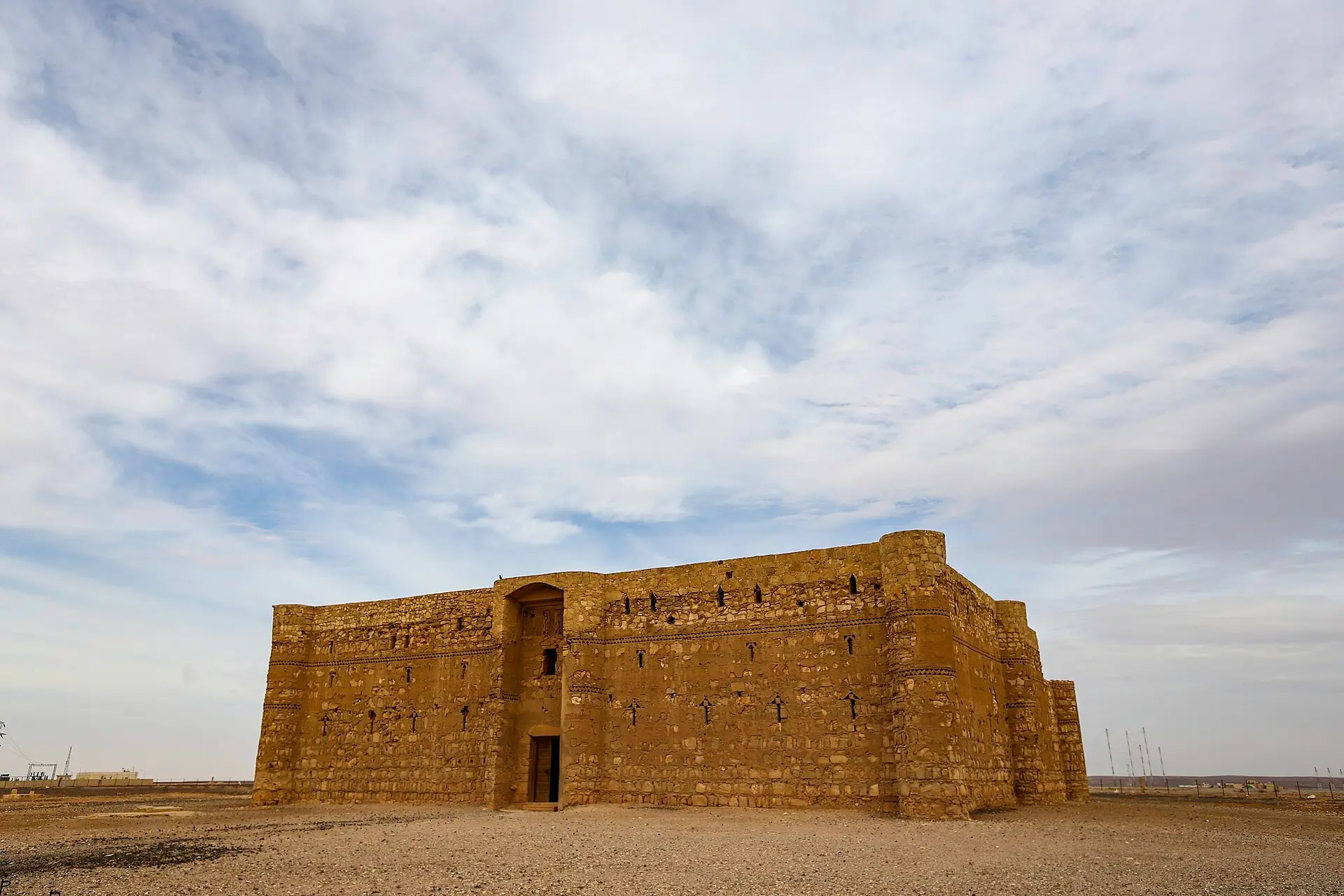
Qasr Kharana
The most fortress-like of the group: a square, two-storey building with round corner towers, standing alone in the plain. A painted inscription inside dates to AD 710. Its purpose is debated — perhaps a meeting place for Umayyad officials and Bedouin tribes. Climb to the upper rooms for views across the desert.
Qasr al-Azraq and the oasis
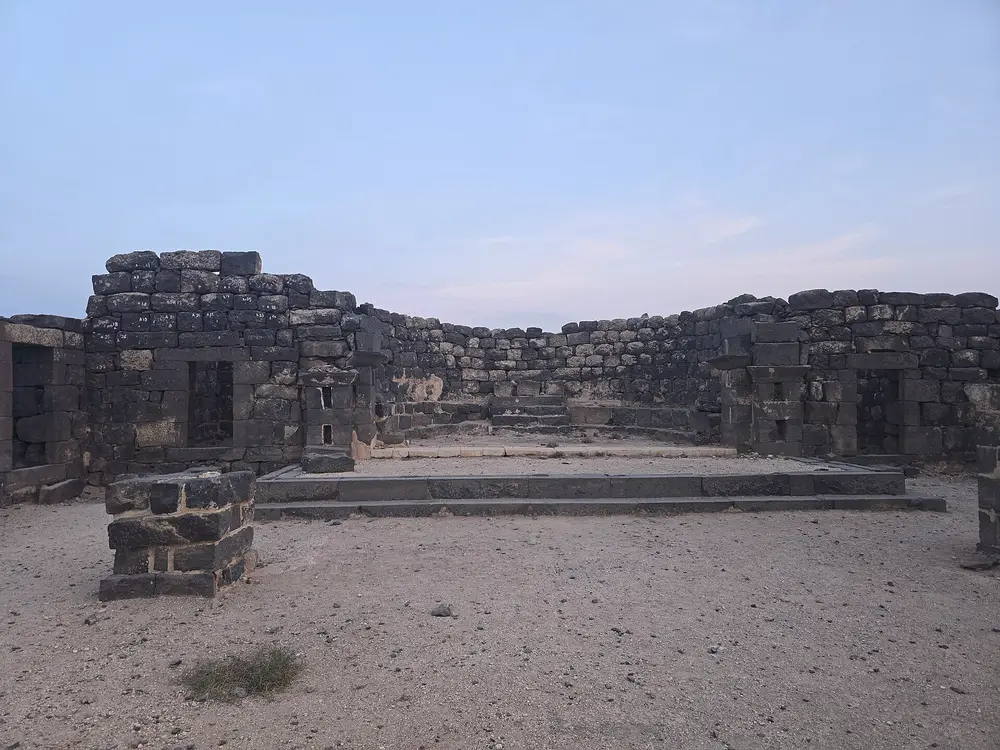
Built of black basalt beside the only permanent water in the eastern desert, Azraq fort has Roman origins and was rebuilt by the Ayyubids in 1237. T. E. Lawrence and the Arab forces of Emir Faisal used it as a base in the winter of 1917–18; his room above the gate is pointed out to visitors. Note the massive basalt doors that still swing on their hinges.
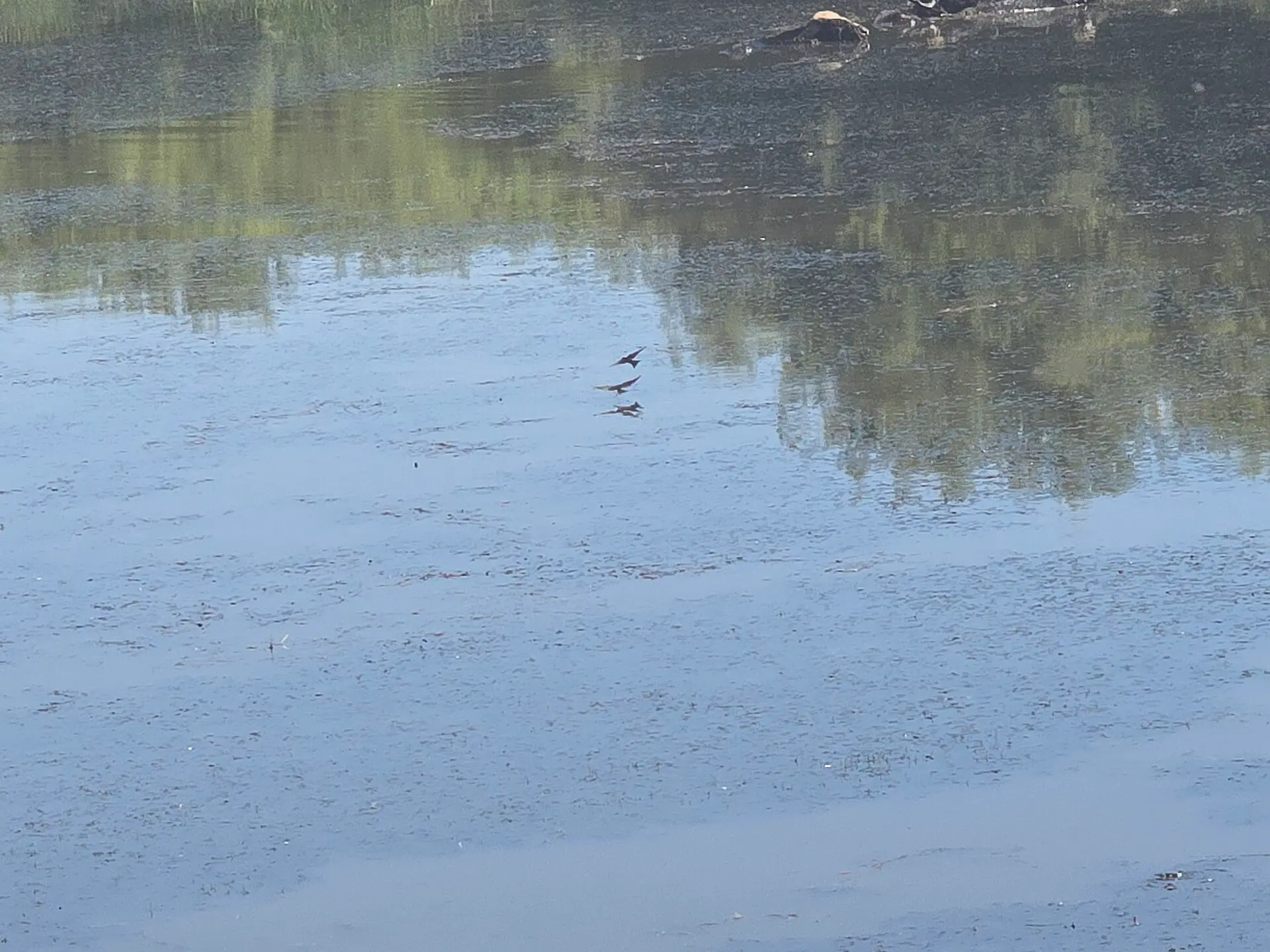
Nearby, the Azraq Wetland Reserve (RSCN) protects what remains of a once-vast oasis that drew millions of migrating birds; boardwalks and hides make it a pleasant stop, especially in spring.
Qasr al-Hallabat, Shaumari and Umm el-Jimal
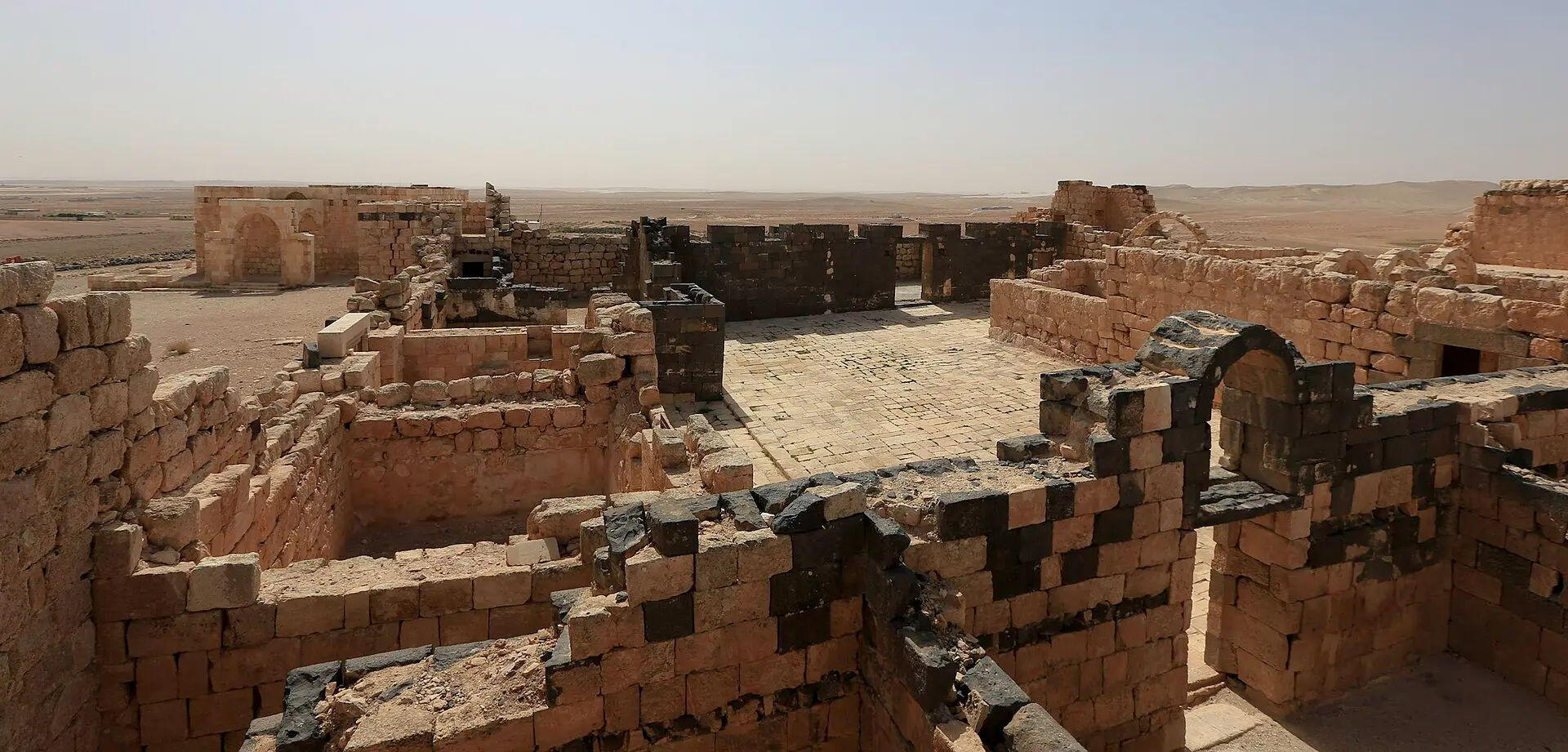
- Qasr al-Hallabat: a Roman fort turned Umayyad palace with fragments of mosaics, and a small mosque and bath (Hammam as-Sarah) nearby.
- Shaumari Wildlife Reserve (RSCN): founded in 1975 to bring back the Arabian oryx, with ostriches, gazelles and wild asses on an RSCN safari.
- Umm el-Jimal: a Byzantine and early Islamic farming town built of black basalt, inscribed by UNESCO in 2024; it lies about 10 km from the Syrian border — outside the 3 km zone the UK FCDO advises against, but check current advice.
Doing the loop
The classic loop runs Amman → Hallabat → Azraq (lunch) → Qusayr Amra → Qasr Kharana → Amman, about 250–300 km. Roads are good but fuel stations are few; fill up in Zarqa or Azraq. GetYourGuide currently lists few dedicated desert-castle tours, so most visitors hire a driver for the day or self-drive; hotels in Amman can arrange it.
Why the Umayyads built here
Historians still debate the purpose of each building, but the desert residences seem to have served several roles at once: places to meet and bind the Bedouin tribes whose loyalty the caliphs needed, hunting lodges for princes who loved the open country, stops on caravan routes between Damascus and Arabia, and estates watered by ingenious cisterns. Their art — frescoes, stucco and mosaics — mixes Byzantine, Persian and early Islamic styles and is rare evidence of court life in the first Islamic dynasty.
The sites at a glance
| Site | What it is | Time needed | Fee (foreign visitors) |
|---|---|---|---|
| Qusayr Amra | Umayyad bathhouse with frescoes; UNESCO since 1985 | 45 min | JD 3 |
| Qasr Kharana | Two-storey fortress-like building, dated by an inscription to AD 710 | 45 min | JD 3 |
| Qasr al-Azraq | Basalt fort by the oasis; Lawrence's winter base in 1917–18 | 45 min | JD 3 |
| Qasr al-Hallabat + Hammam as-Sarah | Roman fort turned Umayyad palace, with a bathhouse nearby | 1 h | JD 3 |
| Azraq Wetland Reserve | Boardwalks and bird hides (RSCN) | 1 h | JD 8 + 16% tax |
| Shaumari Wildlife Reserve | Arabian oryx and other desert species (RSCN) | 1–2 h | JD 5 + 16% tax |
| Umm el-Jimal | Basalt Byzantine–early Islamic town; UNESCO since 2024 | 1.5 h | JD 2 |
Who the desert castles suit
This is a trip for history lovers and travellers who enjoy empty landscapes: the castles are small, spread out and often almost deserted, and much of the day is spent driving across the flat basalt and gravel plains of the Badia. If you have only one or two days in Amman, Jerash or Madaba may give you more for your time; on a longer stay, or a second visit to Jordan, the loop is one of the most memorable days out, especially the painted ceilings of Qusayr Amra. Birdwatchers should add the Azraq Wetland in spring or autumn migration.
Facilities are basic: there are toilets and small rest houses at some sites, few cafés and little shade. Carry water and snacks, and have cash for tickets if you do not hold a Jordan Pass.
Safety in the eastern desert
The main roads east of Amman are busy routes to Iraq and Saudi Arabia, with frequent police checkpoints; carry your passport. As of November 2026 the UK FCDO advises against all travel within 3 km of the Jordan–Syria border, which lies north of the loop; Umm el-Jimal lies only about 10 km from the border, so check current advice before you go. Stay on the main roads, avoid driving after dark and keep up with the regional situation.
Where to stay
Most visitors return to Amman. To break the trip, RSCN's Azraq Lodge (a restored 1940s British field hospital) and a few hotels in Azraq town offer simple rooms.
See all hotels in Azraq on Booking.com
Hotel links go to Booking.com, where you see live prices and availability. We do not list prices because they change daily; JordanTravel.com may earn a commission.
Plan your visit to Desert castles
- Things to doQusayr Amra, Kharana, Azraq fort, Hallabat, the Azraq Wetland, Shaumari and Umm…
- ToursHow to see the desert castles with a guide or driver, and what GetYourGuide currently…
- Getting thereThe desert castle loop by car from Amman, distances between the sites and tips for…
- Where to stayBase yourself in Amman for a day loop, or stay overnight in Azraq for birding and a…
- When to goThe eastern desert by season: hot summers, cold winter nights, spring bird migration at…
Frequently asked questions
Which desert castle is the best?
Qusayr Amra for its frescoes; Kharana for its architecture; Azraq for its history and oasis setting.
Can I see the desert castles without a car?
Public transport is impractical; hire a driver in Amman or join a tour.
Are the desert castles included in the Jordan Pass?
Yes — Qusayr Amra, Qasr Kharana, Qasr al-Azraq and Qasr al-Hallabat are on the Jordan Pass list. The RSCN Azraq Wetland and Shaumari reserves charge separately.
Can I see the desert castles on the way to the airport?
Qasr Kharana and Qasr Mushatta are not far from the airport road, so a short visit before an evening flight is possible with a car. Leave plenty of margin.
Is Qusayr Amra a UNESCO site?
Yes, since 1985, for its remarkable early Islamic frescoes. Umm el-Jimal, in the north-east, was added to the list in 2024.
Is there food on the desert castles loop?
Azraq has simple restaurants serving grills, and there are small shops by the main road. Carry snacks and plenty of water.
Sources and official information
Facts were checked against these official sources in November 2026. Opening hours, prices and timetables change, so confirm before you go.
JordanTravel.com is an independent guide, not the official site of the Jordan Tourism Board, the Government of Jordan or any operator. Some links are affiliate links: tours go to GetYourGuide and hotels go to Booking.com, and we may earn a commission at no extra cost to you.