- Region
- Jerash Governorate
- How long
- Half day – 1 day
- From Amman
- ≈ 48 km, about 1 h
- Entry
- JD 10 (included in the Jordan Pass)
- Time needed
- 3–4 hours for the main monuments
- Main era
- 1st–3rd century AD (Roman Decapolis city)
In short
- Jerash, ancient Gerasa, is a Roman city of colonnaded streets, temples, theatres and plazas, mostly from the 1st to 3rd centuries AD, about an hour north of Amman.
- Allow 3–4 hours: Hadrian's Arch → Hippodrome → South Gate → Oval Plaza → Cardo → Nymphaeum → Temple of Artemis → North Theatre, with the South Theatre and Temple of Zeus on the way.
- Entry is JD 10 or free with the Jordan Pass; go early in summer — there is little shade.
- Combine with Ajloun Castle and Umm Qais for a full northern day.
Why Jerash is special
Few places let you walk a Roman city's streets as completely as Jerash. Ancient Gerasa was one of the Decapolis, a league of Greco-Roman cities east of the Jordan. It flourished under Roman rule from the 1st century AD, when it was rebuilt on a grand plan with a main colonnaded street, the Cardo Maximus, crossed by two side streets. Rich from agriculture and trade, its citizens paid for temples to Zeus and Artemis, two theatres, a hippodrome and public fountains.
The city remained important in the Byzantine period, when more than a dozen churches with mosaic floors were built, and survived into the Umayyad era, until the great earthquake of AD 749 brought much of it down. Buried and largely forgotten, it was rediscovered by the traveller Ulrich Jasper Seetzen in 1806; excavation and restoration have continued since the 1920s, while the modern town grew up on the eastern side of the valley.
For a deep dive into every monument and practical planning, our sister site Jerash.com has a dedicated Jerash travel guide.
Book tours in JerashLive times, prices and free cancellation terms on GetYourGuide.
Check availabilityThe route through the ruins
Jerash.com describes each stop in detail, for example the Oval Plaza and the Temple of Artemis.
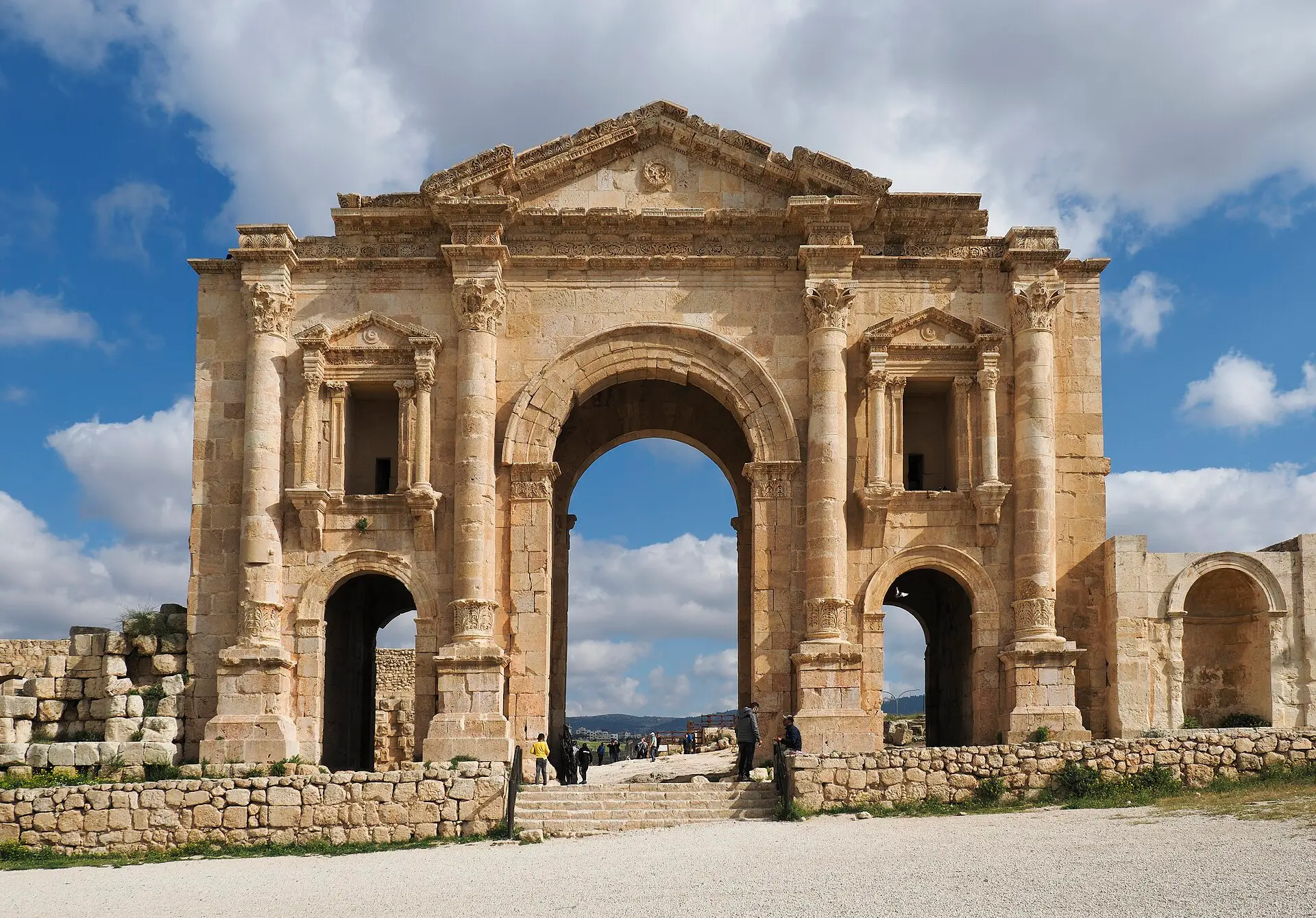
- Hadrian's Arch — a triumphal arch built for Emperor Hadrian's visit in AD 129–130, at the south entrance.
- Hippodrome — the chariot-racing stadium beside the arch, one of the smallest known in the Roman world.
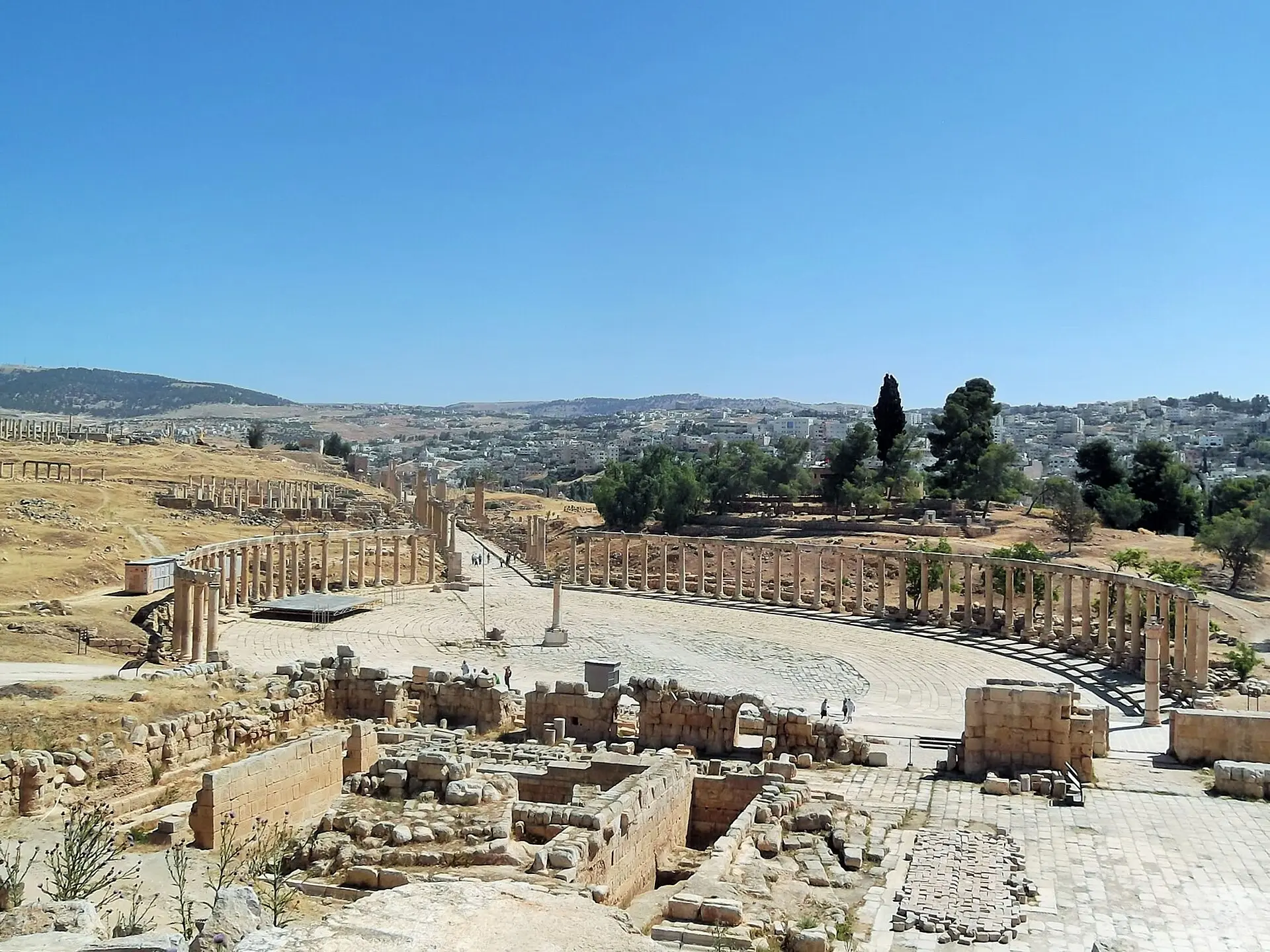
- South Gate and Oval Plaza — the unusual oval forum, about 90 m long, ringed by Ionic columns.
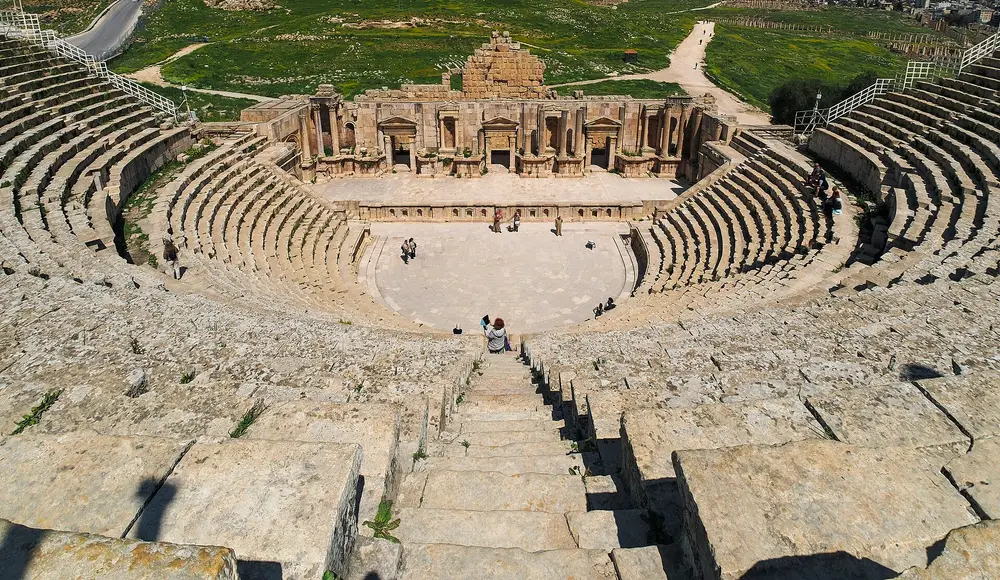
- Temple of Zeus and South Theatre — on the hill to the left; the theatre held around 3,000 spectators and has excellent acoustics.
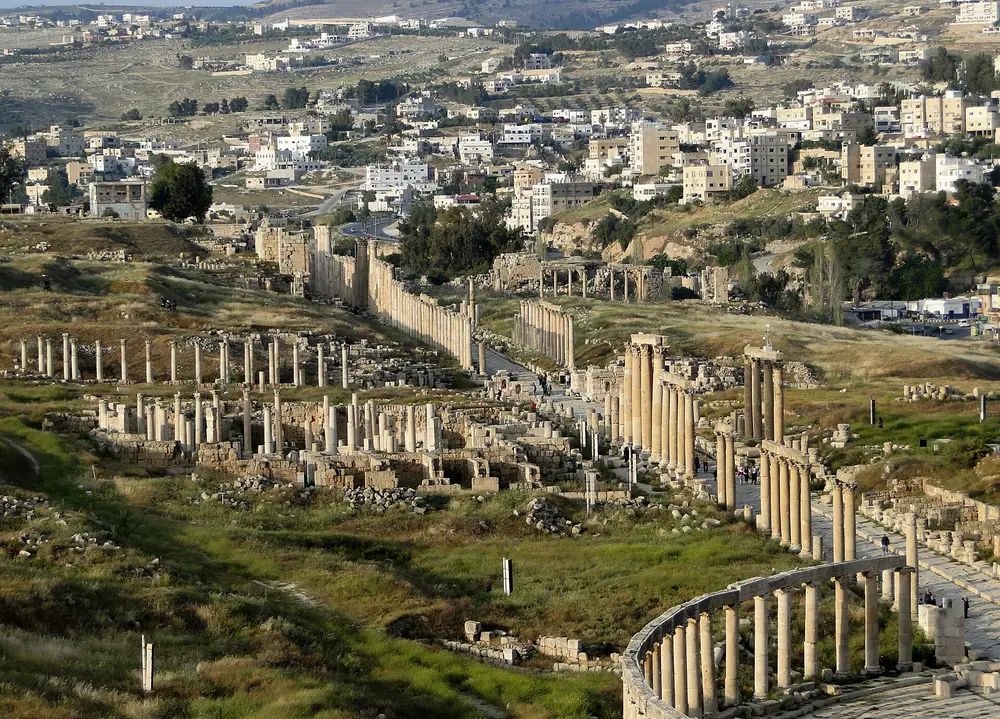
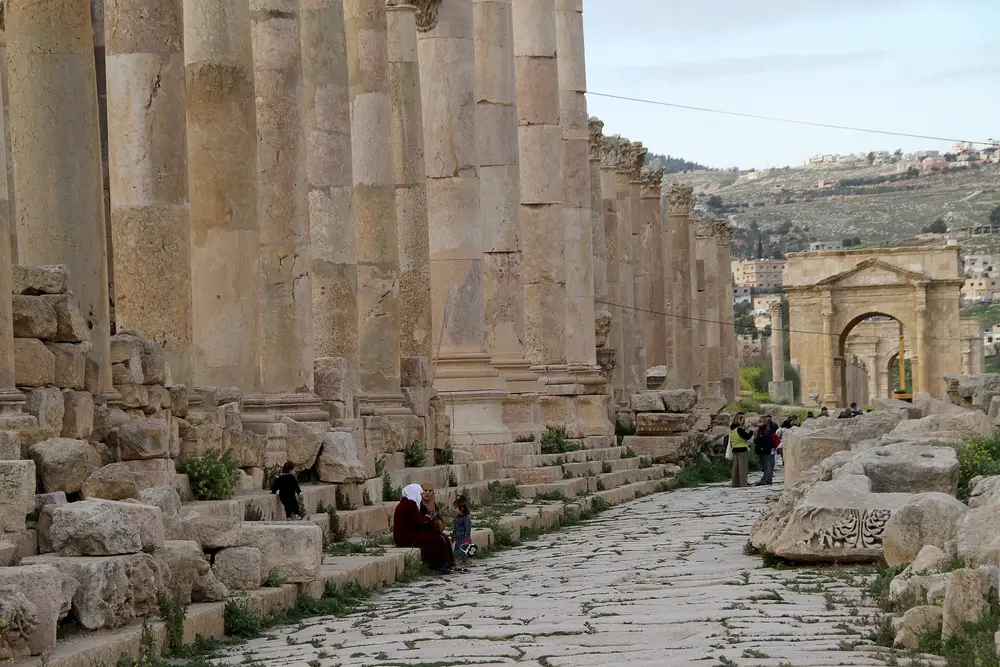
- Cardo Maximus — 800 m of colonnaded street with original paving, rutted by cart wheels, and drainage below.
- Nymphaeum — the ornate public fountain dedicated in AD 191.
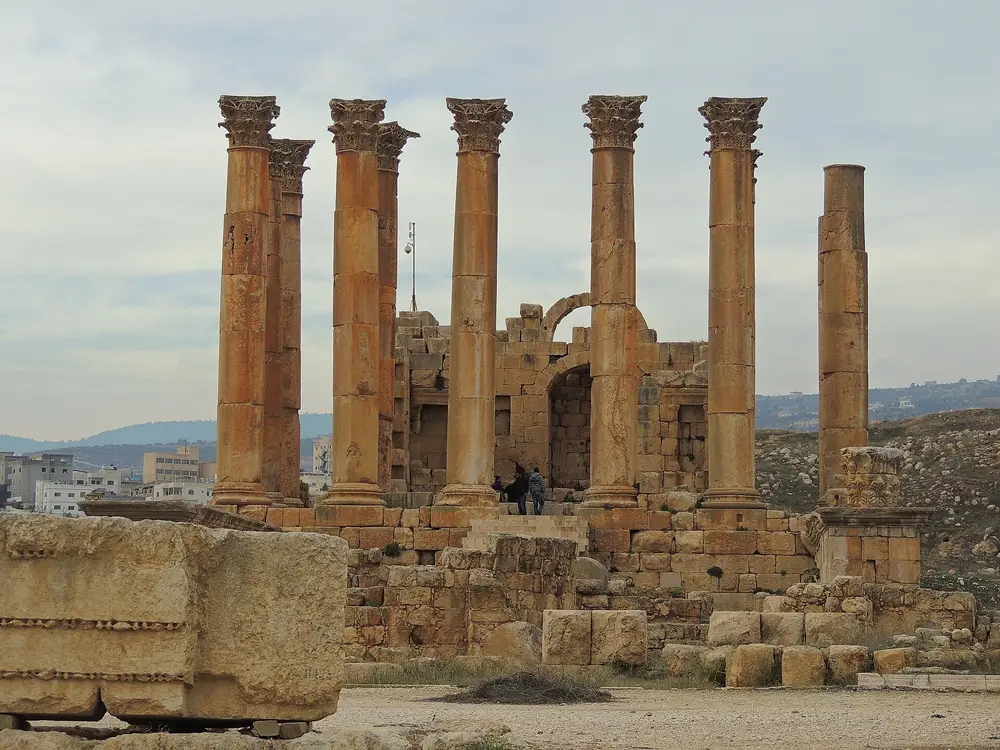
- Temple of Artemis — the city's main sanctuary, with tall Corinthian columns, dedicated to its patron goddess.
- North Theatre and North Tetrapylon — a smaller theatre (later an odeon) and the four-way monument at the northern crossroads.
Tickets, hours and practicalities
As of November 2026, foreign visitors pay JD 10 at the visitor centre by Hadrian's Arch; the site is included in the Jordan Pass. It opens around 8 AM and closes in the late afternoon (earlier in winter). There is a small museum and toilets near the entrance, a café in the visitor area and very little shade among the ruins.
- Wear sun protection and carry water — midday in July and August is hot.
- Allow 3–4 hours; half a day with a lunch break in the modern town.
- Local guides can be hired at the visitor centre.
- The site is large and uneven; wheelchair access is limited to parts of the main streets.
Jerash Festival
Every summer (usually in July) the Jerash Festival of Culture and Arts fills the theatres and plazas with Arab and international music, poetry, dance and crafts — one of the region's oldest arts festivals, first held in 1981. Dates are announced each spring; check our events calendar and the festival's official channels.
Getting there from Amman
Jerash is about an hour by car or taxi from Amman. Minibuses run from the North Bus Station (Tabarbour) and drop you on the main road, a short walk from the entrance. Jerash.com compares all the options — bus, taxi, car and tour — in Amman to Jerash. See also our getting to Jerash page.
Half-day tour to Jerash from Amman
Morning or afternoon trip to the Roman city of Gerasa with transport and time to walk the Cardo, Oval Plaza and theatres.
Check availabilityBook via GetYourGuide
Private or shared Jerash, Ajloun Castle and Umm Qais day tour
All three northern highlights in one day from Amman, with a choice of private car or a shared group. 4.9/5 from about 270 reviews (as of November 2026).
Check availabilityBook via GetYourGuide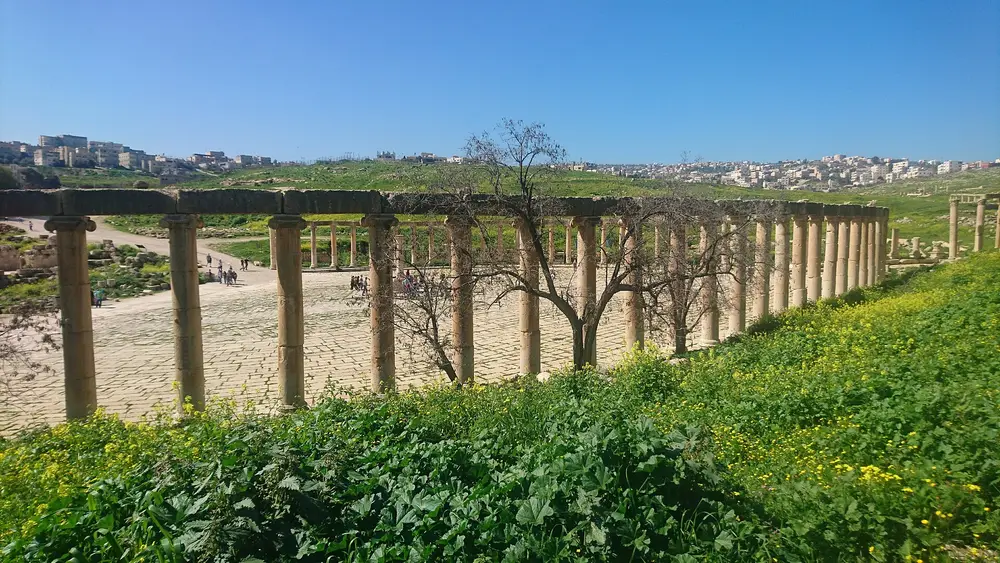
Jerash, Ajloun Castle or Umm Qais private tour from Amman
Private driver-guide for the north: Roman Jerash plus Ajloun's Ayyubid castle or the Gadara ruins at Umm Qais above the Sea of Galilee.
Check availabilityBook via GetYourGuideTour listings are on GetYourGuide. Prices, times and cancellation terms are shown live on each listing and can change; JordanTravel.com may earn a commission at no extra cost to you.
A 3-hour walking plan
| Time | Stop | Don't miss |
|---|---|---|
| 0:00 | Hadrian's Arch and the Hippodrome | The arch built for Hadrian's visit in AD 129–130 |
| 0:20 | South Gate and Oval Plaza | The view from the steps of the Temple of Zeus |
| 0:45 | South Theatre | The acoustics from the centre of the stage |
| 1:15 | Cardo Maximus | Chariot ruts and the original drain covers |
| 1:40 | Nymphaeum and Temple of Artemis | The giant columns said to sway in the wind |
| 2:20 | Byzantine churches and North Theatre | Mosaic floors |
| 2:45 | Museum and back to the gate | Finds from the city's long history |
Jerash with children and limited mobility
Children love the Hippodrome, the echo in the South Theatre and the long paved Cardo, which is easy to walk. The site is large and largely unshaded, so carry water and hats and plan a break at the café near the Oval Plaza. The main street is mostly flat but uneven, with ancient paving and some steps; wheelchair users will find parts of the Cardo manageable with help, while the Temple of Zeus, the theatres and the Temple of Artemis involve stairs. Ask at the visitor centre for the smoothest route.
Jerash in Jordan's story
Jerash was never truly lost: after earthquakes in the 8th century and the decline of trade, the city shrank, and its ruins were partly buried under soil washed down from the hills — which is why so much survived. The German traveller Ulrich Jasper Seetzen identified the site in 1806, and in the 1870s Circassian settlers founded the modern town on the eastern bank. Excavation and restoration have continued since the 1920s with Jordanian and international teams, and work is still uncovering houses, workshops and churches. Many visitors find Jerash the best complement to Petra: where Petra shows a Nabataean city carved in rock, Jerash shows how a provincial Roman city was planned, built and lived in.
Where to stay and eat
Most visitors base themselves in Amman, but a night in Jerash lets you see the ruins at opening time and combine Ajloun and Umm Qais without rushing. Restaurants near the entrance serve mezze and grills with views of the ruins.
Hadrian's Arch
JerashSmall hotel within sight of Hadrian's Arch — wake up next to the ruins.
See on Booking.comJeeso Boutique Hotel
JerashBoutique hotel in Jerash with very high reviews.
See on Booking.comJerash City View
JerashJerash City View: hotel with views across the ancient city.
See on Booking.comSee all hotels in Jerash on Booking.com
Hotel links go to Booking.com, where you see live prices and availability. We do not list prices because they change daily; JordanTravel.com may earn a commission.
Plan your visit to Jerash
- Things to doThe monuments of Jerash in walking order — Hadrian's Arch, Hippodrome, Oval Plaza,…
- ToursHalf-day Jerash trips, full days with Ajloun Castle and Umm Qais, and Amman + Jerash…
- Getting thereAmman to Jerash by minibus from Tabarbour, taxi, Uber or rental car, plus onward routes…
- Where to stayShould you sleep in Jerash or Amman? Small hotels by Hadrian's Arch and the North Gate,…
- When to goJerash by season — spring flowers, summer heat and the Jerash Festival, autumn light…
Frequently asked questions
How long do you need in Jerash?
Three to four hours for the main monuments; a full day if you add Ajloun Castle or Umm Qais.
Is Jerash included in the Jordan Pass?
Yes. Without the pass, entry is JD 10 for foreign visitors as of November 2026.
Is Jerash worth visiting if I have seen Petra?
Yes — they are completely different. Petra is Nabataean rock architecture; Jerash is a planned Roman city of streets, temples and theatres.
Can I visit Jerash without a tour?
Easily: take a taxi or the minibus from Amman's North Bus Station and buy your ticket at the gate.
What should I wear to Jerash?
Comfortable shoes with grip for the polished paving stones, a hat and sun protection. There is no formal dress code at the ruins, but modest clothing is respectful in the town.
Is Jerash crowded?
Rarely by Petra standards. Coach groups arrive mid-morning; Fridays and holidays bring Jordanian families. Early mornings and late afternoons on weekdays are quiet.
Sources and official information
Facts were checked against these official sources in November 2026. Opening hours, prices and timetables change, so confirm before you go.
JordanTravel.com is an independent guide, not the official site of the Jordan Tourism Board, the Government of Jordan or any operator. Some links are affiliate links: tours go to GetYourGuide and hotels go to Booking.com, and we may earn a commission at no extra cost to you.