In short
- People have lived in what is now Jordan for hundreds of thousands of years; 'Ain Ghazal near Amman was one of the largest Neolithic towns in the Near East.
- The Nabataeans built Petra; Rome annexed their kingdom in AD 106, and Decapolis cities such as Jerash and Gadara flourished.
- The Umayyad caliphs left the desert castles; Crusaders and Saladin's successors left Karak, Shobak and Ajloun.
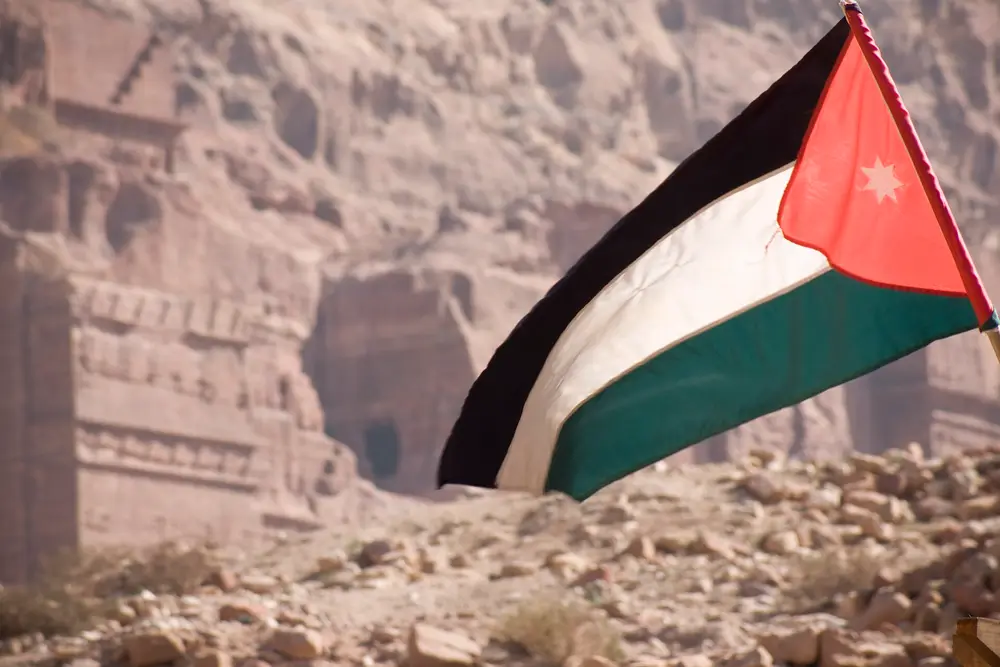
- Modern Jordan grew out of the Arab Revolt of 1916–18: the Emirate of Transjordan was founded in 1921 and became independent on 25 May 1946.
Prehistory and the first towns
Stone tools in the Jordan Valley and the eastern desert show human presence from the Lower Palaeolithic. In the Neolithic, around 7250–5000 BC, 'Ain Ghazal on the edge of modern Amman grew into one of the largest farming settlements of its time. Its plaster statues, now in the Jordan Museum, are among the oldest large human figures ever made. In the Chalcolithic and Bronze Ages, copper from Feynan in Dana was mined and traded across the region.
Ammon, Moab and Edom
In the Iron Age three kingdoms shared the land east of the Jordan: Ammon around Amman (Rabbath Ammon), Moab on the plateau between Wadi Mujib and Wadi Hasa, and Edom in the south. The Mesha Stele, found at Dhiban in 1868, records a victory of the Moabite king Mesha around 840 BC and is one of the most important inscriptions from the period. The Bible's story of Moses on Mount Nebo and the route of the 'King's Highway' belong to this landscape.
The Nabataeans
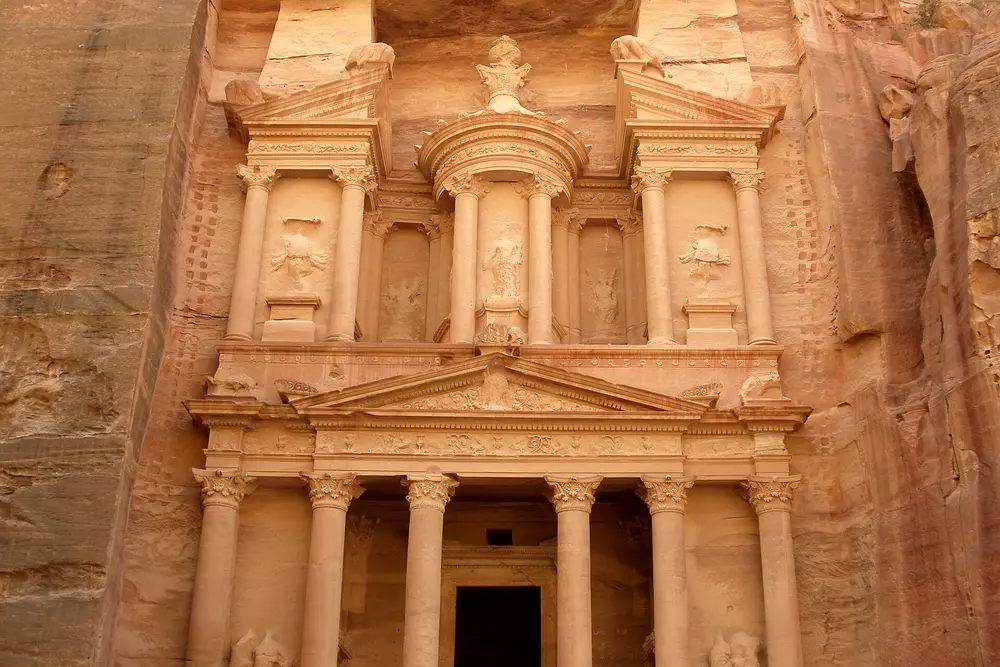
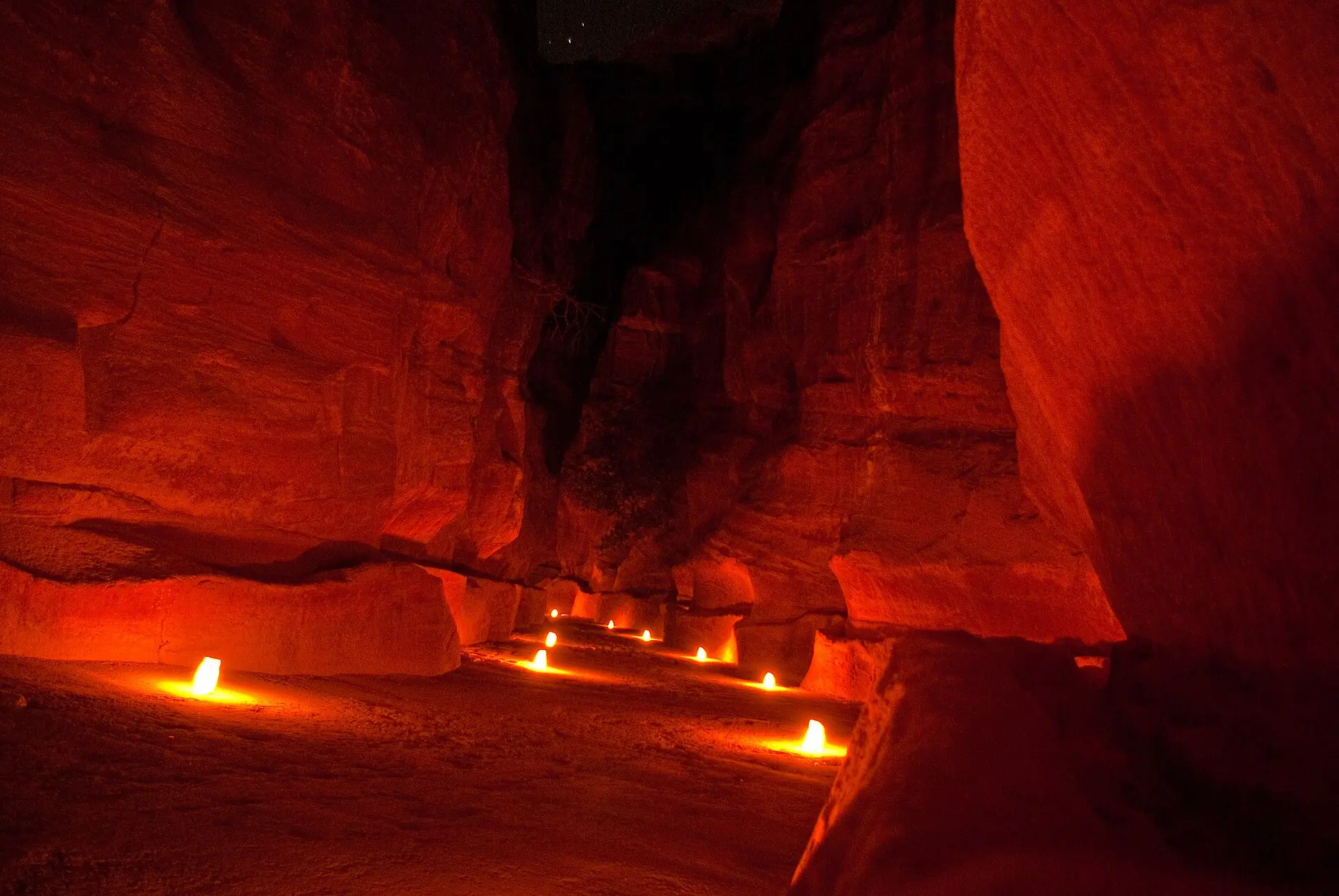
From around the 4th century BC, the Nabataeans — originally nomadic Arabs — grew rich controlling the incense and spice caravans between Arabia and the Mediterranean. Their capital Petra, carved from rose-red sandstone and fed by an ingenious water system, reached its height around the 1st century BC and the 1st century AD under kings such as Aretas IV. Their script is an ancestor of the Arabic alphabet. In AD 106 Emperor Trajan annexed the kingdom as the Roman province of Arabia.
Rome and Byzantium
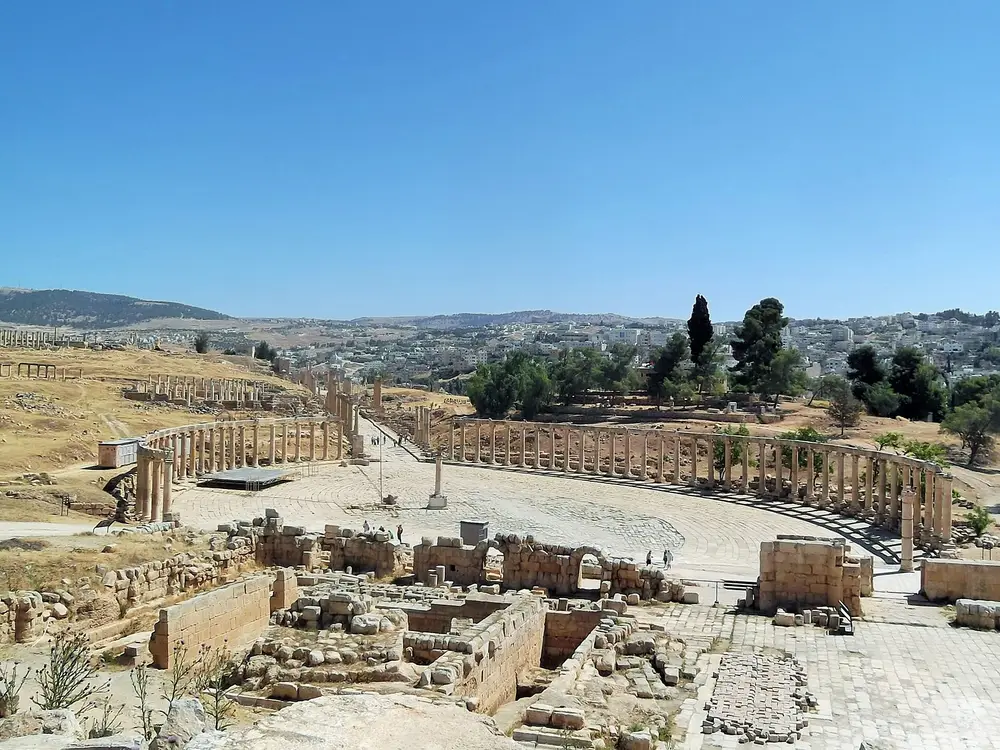
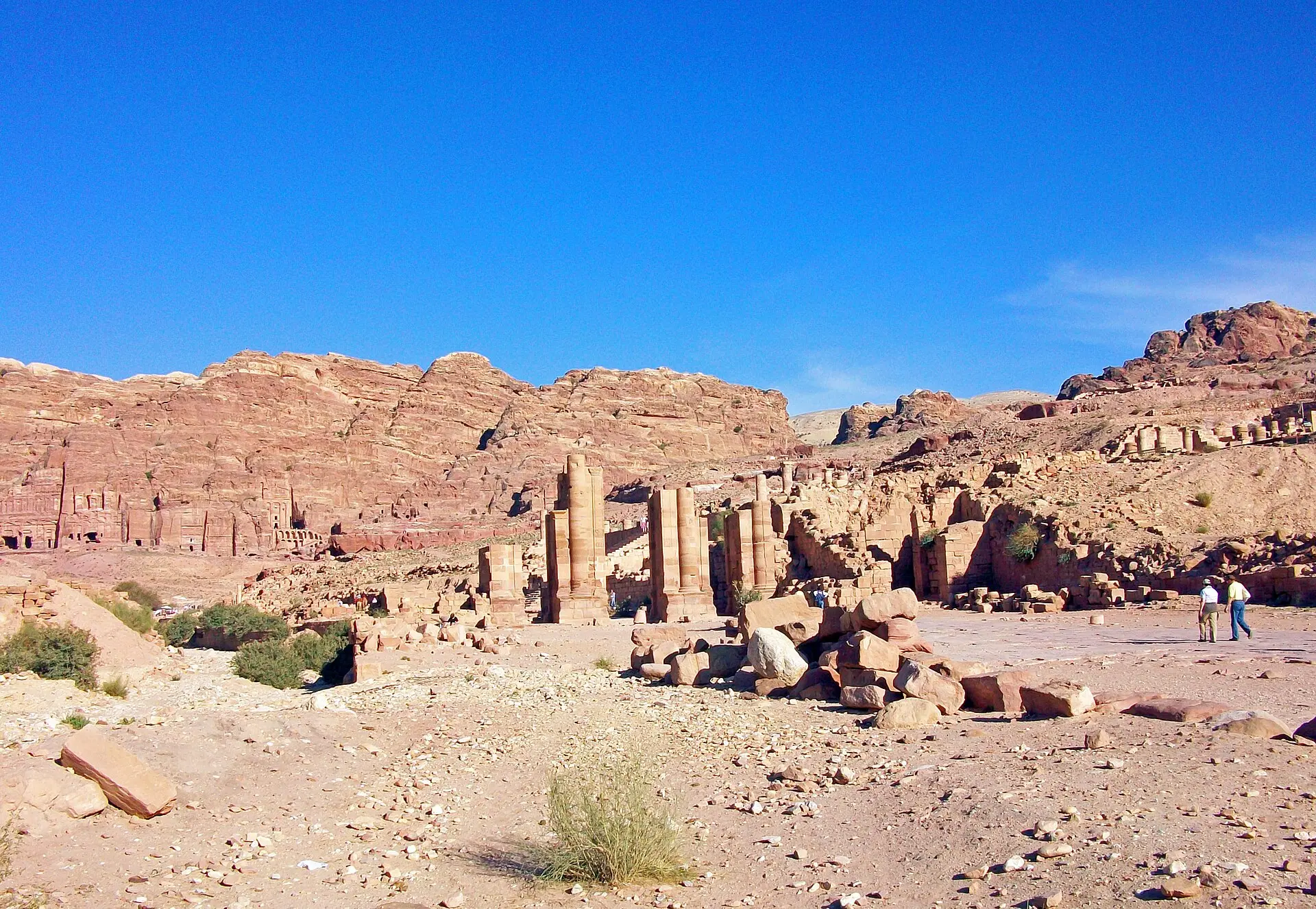
Under Rome, the Via Nova Traiana linked Bostra (in today's Syria) with Aila (Aqaba), following the old King's Highway. Decapolis cities — Gerasa (Jerash), Gadara (Umm Qais), Philadelphia (Amman) and Pella — were rebuilt with colonnaded streets, temples and theatres. Christianity spread from the 4th century; Byzantine churches with magnificent floor mosaics survive in Madaba, Mount Nebo, Umm ar-Rasas and Jerash.
Early Islam and the Umayyads
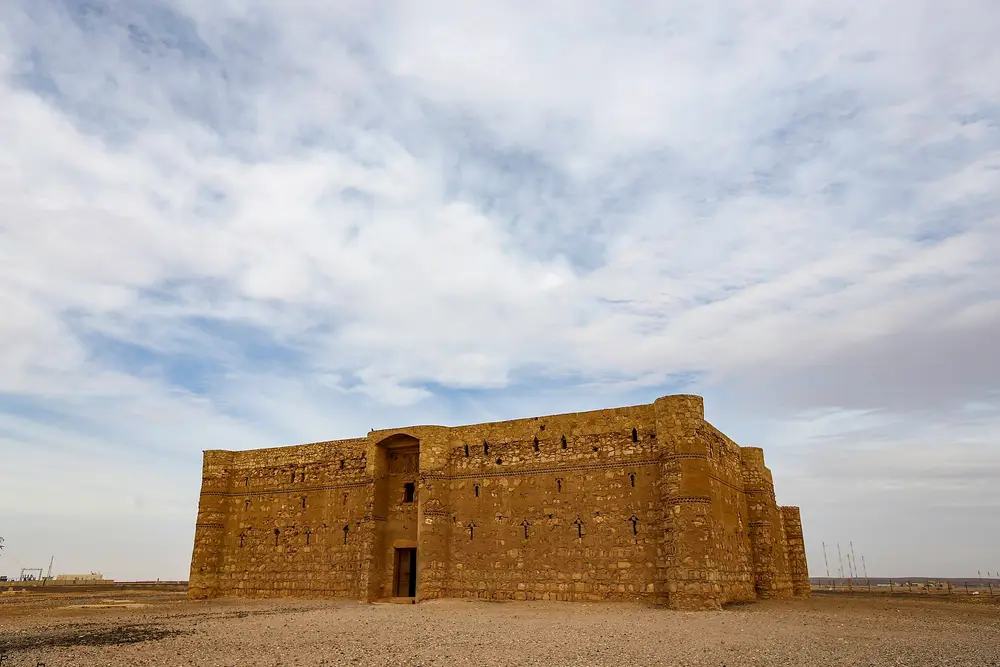
The first battles between the early Muslim armies and Byzantium were fought here — at Mu'tah near Karak (629) and on the Yarmouk river (636). Under the Umayyad caliphs (661–750), based in Damascus, Jordan lay close to the heart of the empire: the desert castles such as Qusayr Amra and the Umayyad Palace on the Amman Citadel date from this era. The earthquake of 749 devastated many cities, and the Abbasid move to Baghdad left the region a quieter backwater.
Crusaders, Ayyubids and Mamluks
In the 12th century the Crusader Kingdom of Jerusalem built castles at Shobak (1115) and Karak (from around 1142) to control the routes east of the Jordan. Saladin's forces took them in 1188–89 after the Battle of Hattin, and his commander built Ajloun Castle in 1184–85. The Mamluk sultans of Egypt later rebuilt the castles and maintained the pilgrim routes.
Ottoman Jordan and the Hejaz Railway
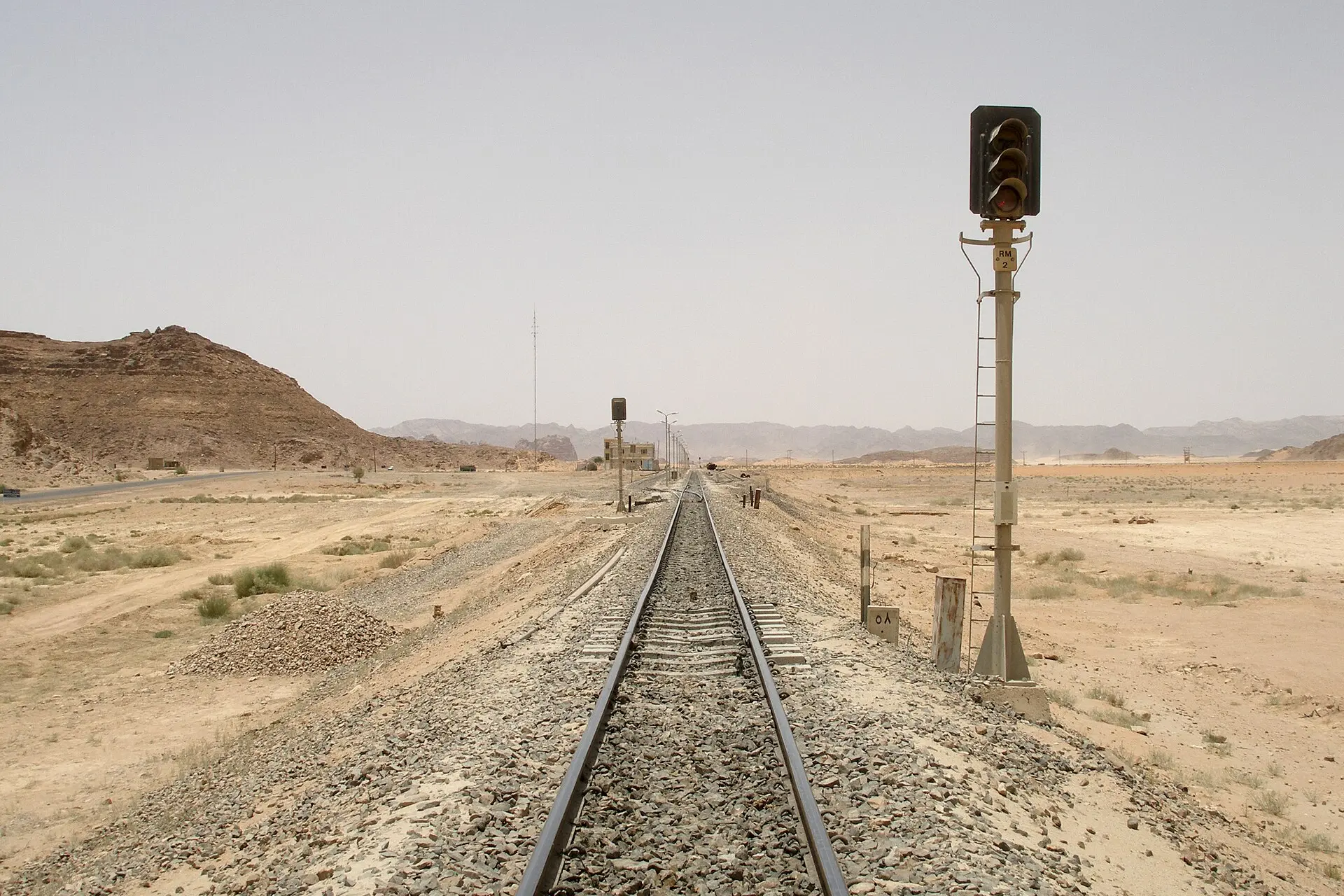
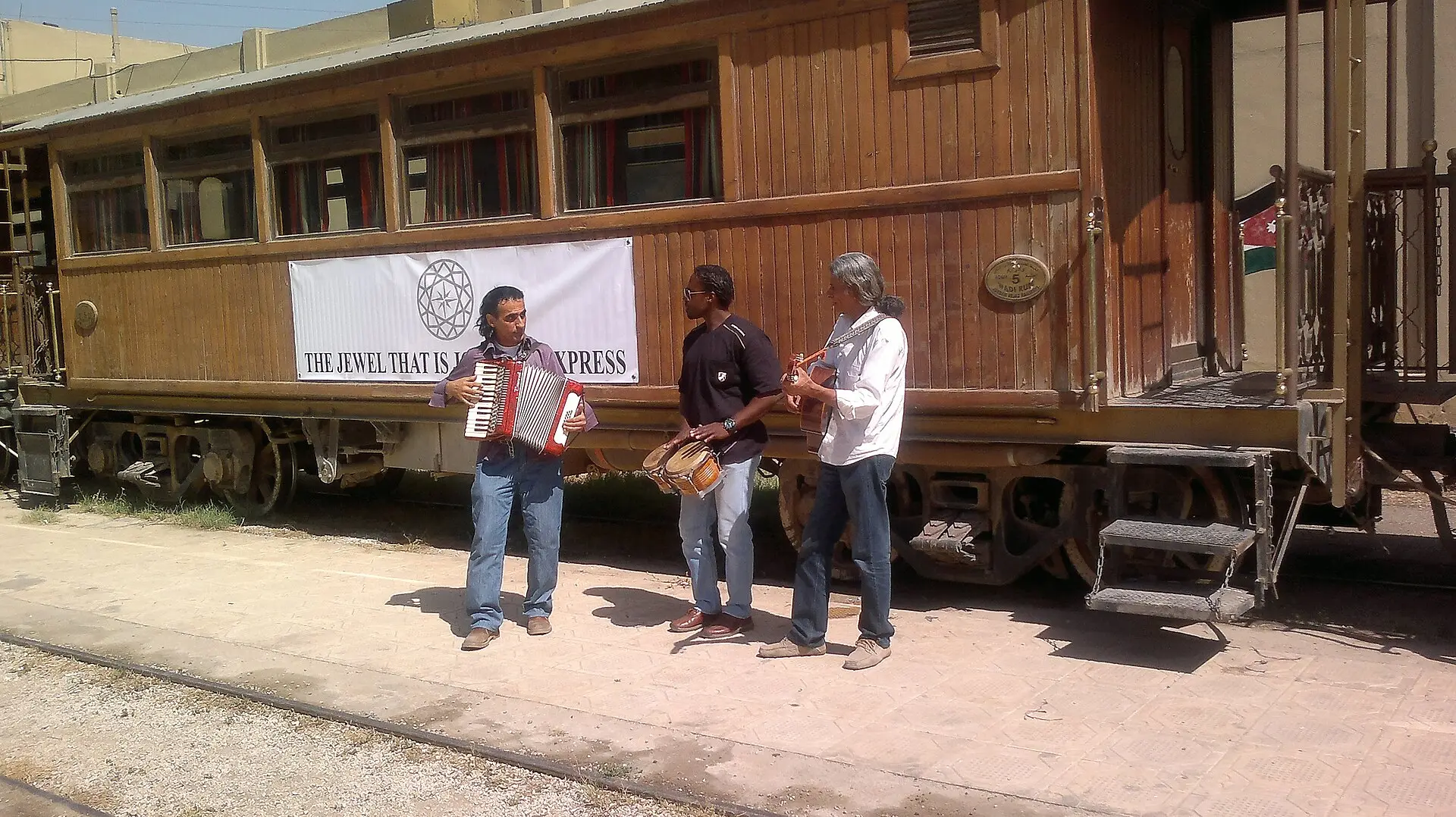
The Ottomans ruled the region from 1516. For centuries it was a thinly populated land of Bedouin tribes, villages and pilgrim stations on the Hajj route to Mecca. Circassian and Chechen settlers arrived in the late 19th century and refounded Amman; Christian families resettled Madaba. Between 1900 and 1908 the Ottomans built the Hejaz Railway from Damascus to Medina, passing through Amman and Ma'an.
The Arab Revolt and the birth of the kingdom
In June 1916 Sharif Hussein bin Ali of Mecca launched the Great Arab Revolt against Ottoman rule, with British support. His son Emir Faisal's forces, joined by T. E. Lawrence, took Aqaba in July 1917, raided the Hejaz Railway and advanced north to Damascus in 1918. After the war, another son, Emir Abdullah, founded the Emirate of Transjordan in 1921 under a British mandate, with Amman as its capital.
Transjordan became independent on 25 May 1946 as the Hashemite Kingdom of Transjordan, renamed Jordan in 1949. Abdullah I was assassinated in 1951; his grandson Hussein reigned from 1952 to 1999, through the wars of 1948 and 1967 (when Jordan lost the West Bank), the 1970 conflict known as Black September and the 1994 peace treaty with Israel. King Abdullah II has reigned since February 1999.
- c. 7250 BC
'Ain Ghazal
Neolithic town on the edge of today's Amman.
- c. 840 BC
Mesha Stele
Moabite king records his victories.
- 1st c. BC – 1st c. AD
Nabataean Petra at its height
The Treasury and many tombs are carved.
- AD 106
Roman province of Arabia
Trajan annexes the Nabataean kingdom.
- AD 129–130
Hadrian visits Gerasa
Hadrian's Arch is built at Jerash.
- 661–750
Umayyad caliphate
Desert castles and the Citadel palace.
- 1115 / 1142
Crusader castles
Shobak and Karak are built.
- 1516
Ottoman rule begins
Four centuries of Ottoman administration.
- 1916–1918
Great Arab Revolt
Aqaba is taken in July 1917.
- 1921
Emirate of Transjordan
Emir Abdullah founds the state.
- 25 May 1946
Independence
The Hashemite Kingdom is proclaimed.
- 1994
Peace treaty with Israel
Signed in October at Wadi Araba.
- 1999
King Abdullah II
Accedes to the throne.
Where to see each era
| Era | Where to see it |
|---|---|
| Neolithic | 'Ain Ghazal statues in the Jordan Museum (Amman); Beidha near Little Petra |
| Iron Age kingdoms | Amman Citadel; Dhiban; the Mesha Stele story in Madaba and the Jordan Museum |
| Nabataean | Petra, Little Petra, Khirbet et-Tannur finds in the Jordan Museum |
| Roman | Jerash, Umm Qais, Amman's Roman Theatre and Temple of Hercules |
| Byzantine | Madaba mosaics, Mount Nebo, Umm ar-Rasas, the Baptism Site, Umm el-Jimal |
| Umayyad | Desert castles, the Umayyad Palace on the Amman Citadel |
| Crusader and Mamluk | Karak and Shobak, Ajloun Castle, Aqaba Fort |
| Ottoman | As-Salt, Hejaz Railway stations, Umm Qais village |
| Arab Revolt and kingdom | Aqaba's Arab Revolt Plaza, Wadi Rum, the Martyrs' Memorial in Amman |
Key dates
- c. 312 BC
Nabataeans in Petra
First written reference to the Nabataeans, in an account of Greek attacks on their rock stronghold.
- AD 106
Roman province
Trajan annexes the Nabataean kingdom as the province of Arabia.
- AD 363
Earthquake
A great earthquake damages Petra and other cities of the region.
- 636
Battle of the Yarmouk
Byzantine rule in the region ends.
- 1812
Burckhardt
The Swiss explorer reaches Petra, bringing it to European attention.
- 1908
Hejaz Railway
The line reaches Medina, passing through Amman and Ma'an.
- 1921
Emirate of Transjordan
Emir Abdullah establishes the emirate under the British mandate.
- 1946
Independence
The Hashemite Kingdom of Transjordan becomes independent on 25 May.
- 1994
Peace treaty
Jordan and Israel sign a peace treaty.
- 1999
King Abdullah II
Accedes to the throne after the death of King Hussein.
Jordan today
Modern Jordan is a constitutional monarchy of about 11.5 million people, a large share of them of Palestinian origin, alongside long-settled Bedouin and village families, Circassians, Chechens, Armenians and more recent refugees from Iraq and Syria. Water scarcity, the economy and the region's conflicts shape daily politics; tourism is one of the country's most important industries. Find out more in about Jordan.
Frequently asked questions
Who built Petra?
The Nabataeans, an Arab people who controlled caravan trade from around the 4th century BC until Rome annexed their kingdom in AD 106.
When did Jordan become independent?
On 25 May 1946, celebrated each year as Independence Day.
What was the Great Arab Revolt?
The 1916–18 uprising led by Sharif Hussein of Mecca and his sons against Ottoman rule, supported by Britain. Its forces took Aqaba in 1917, and it paved the way for the Hashemite states, including Jordan.
Was Petra really lost?
Not to the local Bedouin, who lived among its tombs for centuries. It was 'lost' to Europe until Johann Ludwig Burckhardt reached it in 1812.
What are the Dead Sea Scrolls doing in Amman?
Fragments of the Dead Sea Scrolls and the Copper Scroll, found in caves near Qumran in the mid-20th century, are displayed in the Jordan Museum in Amman.
Why are there so many castles in Jordan?
Jordan lay on key routes between Syria, Arabia and Egypt; Crusaders, Ayyubids, Mamluks and Ottomans all built or rebuilt forts to control trade, pilgrimage and frontier lands.
Who were the Decapolis cities?
A group of Greco-Roman cities east of the Jordan, including Gerasa (Jerash), Gadara (Umm Qais), Pella and Philadelphia (Amman).
What is the Mesha Stele?
A 9th-century BC inscribed stone found at Dhiban in 1868, in which King Mesha of Moab records his victories over Israel. The original is in the Louvre; replicas are shown in Jordan, including at the Jordan Museum.
When was the Hejaz Railway built?
Between 1900 and 1908, from Damascus to Medina, to carry pilgrims; it was attacked during the Arab Revolt and survives in Jordan as heritage trips and old stations.
Sources and official information
Facts were checked against these official sources in November 2026. Opening hours, prices and timetables change, so confirm before you go.
JordanTravel.com is an independent guide, not the official site of the Jordan Tourism Board, the Government of Jordan or any operator. Some links are affiliate links: tours go to GetYourGuide and hotels go to Booking.com, and we may earn a commission at no extra cost to you.