In short
- The main trail from the Visitor Centre to the Monastery and back is about 20 km with roughly 800 steps at the end.
- The two best viewpoints — the High Place of Sacrifice and the Al-Khubtha view over the Treasury — each take 1–2 hours return from the valley.
- Little Petra (Siq al-Barid) is free and quiet; the 'back door' trail links it to the Monastery.
- Times below are walking times for a reasonably fit adult, excluding stops; double them with children.
The Siq and the Treasury (Al-Khazneh)
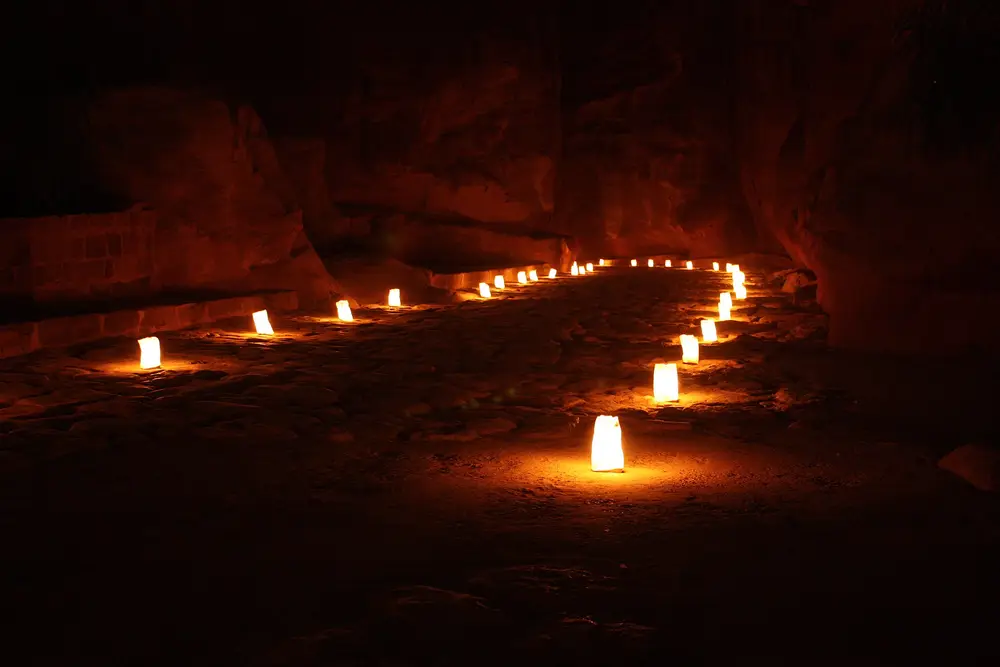
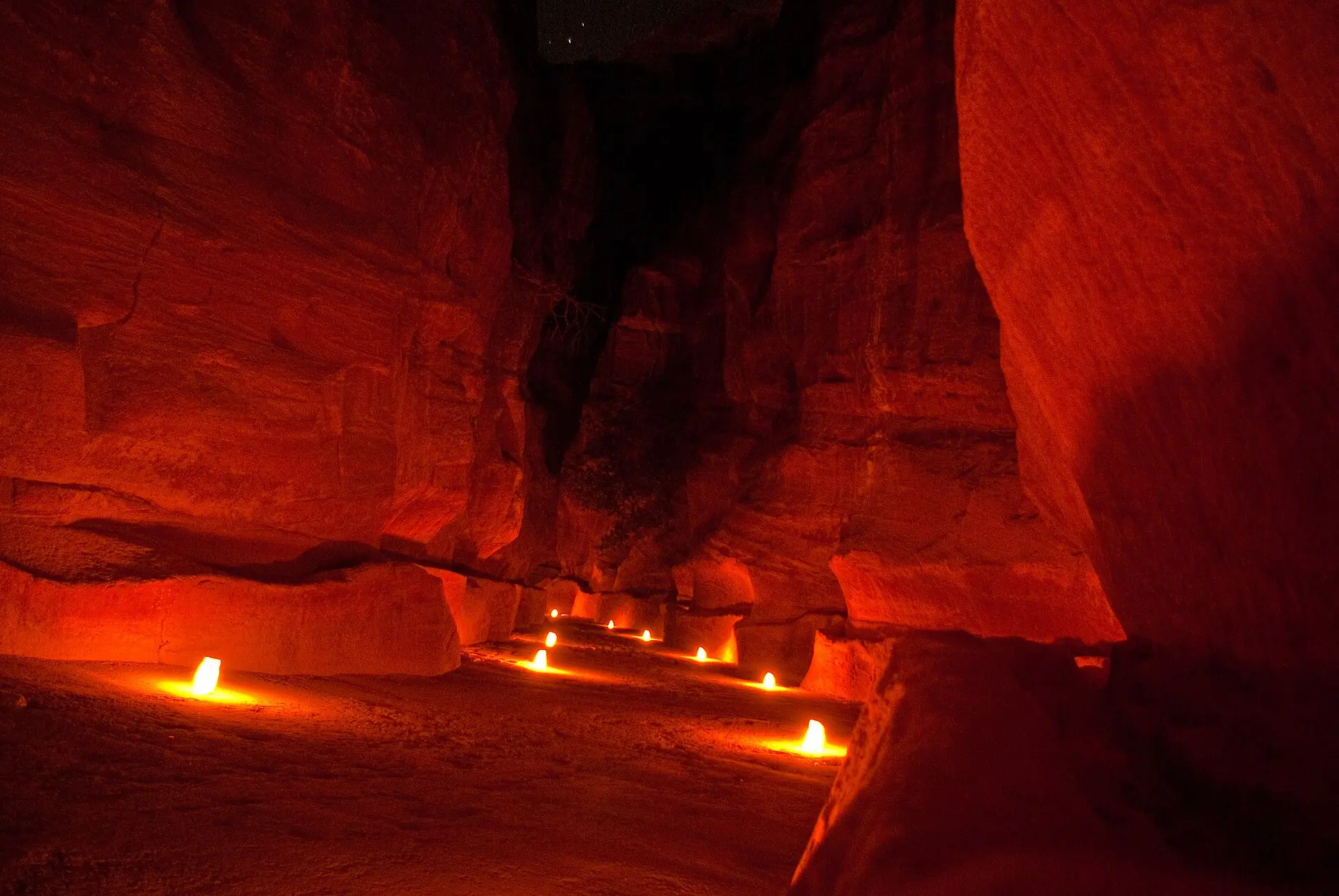
From the Visitor Centre it is about 800 m along the Bab as-Siq to the dam at the entrance of the Siq, then 1.2 km through the gorge. Look for the water channels carved into both walls, the remains of the original paving and a weathered relief of a camel caravan. The Siq ends at the Treasury, whose two-storey facade was carved in the 1st century BC or AD; the urn at the top is pocked with bullet marks from people who believed it held treasure.
The light: the Treasury faces roughly east and is fully lit mid-morning, while the square in front is shady and pleasant in the late afternoon.
- Visitor Centre → Treasury
- ≈ 2 km, 30–40 min walk (downhill on the way in)
- Difficulty
- Easy; sandy and uneven in places
- Horse ride
- Offered on the first 800 m (Bab as-Siq) — included in the ticket, tip expected
Book tours in PetraLive times, prices and free cancellation terms on GetYourGuide.
Check availabilityStreet of Facades, the Theatre and the Royal Tombs
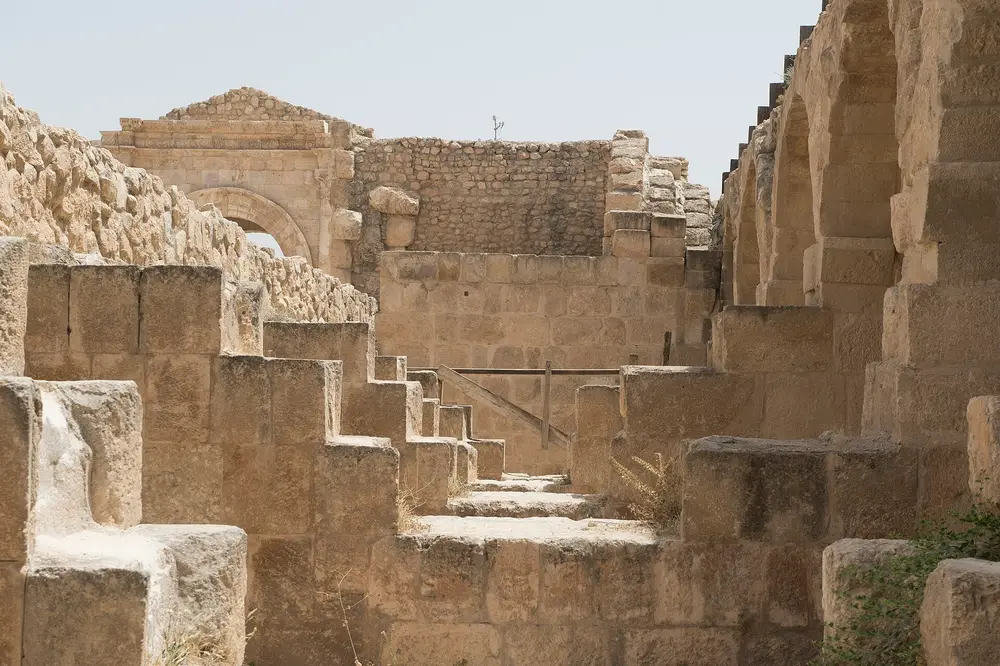
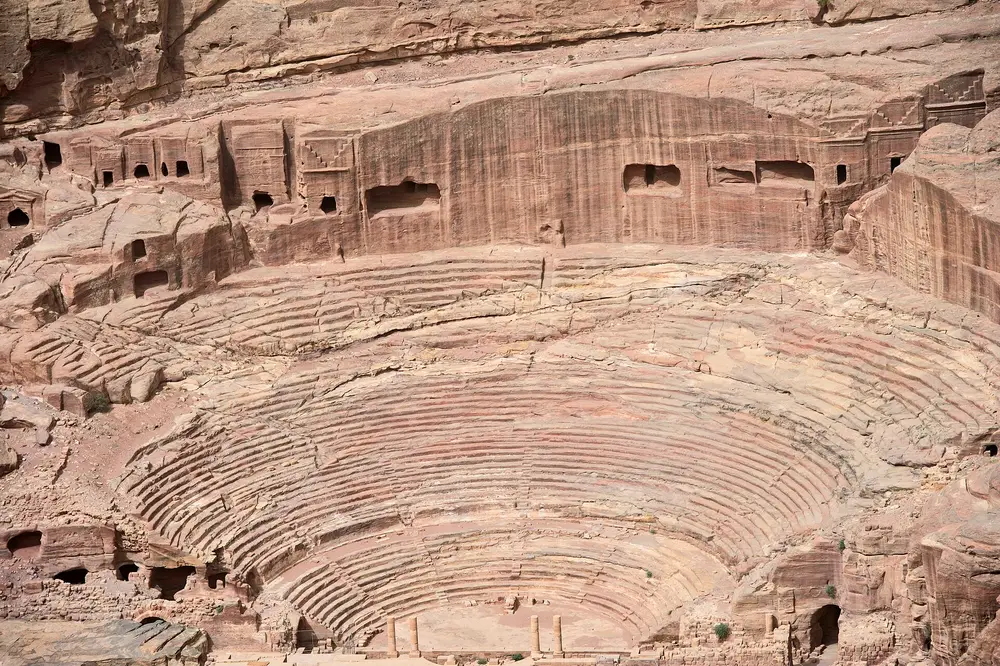
Past the Treasury the Outer Siq widens into the Street of Facades, rows of tombs with stepped 'crow-step' tops. The Theatre, cut into the mountain with seating for several thousand, dates from the Nabataean period and was enlarged after the Roman annexation.
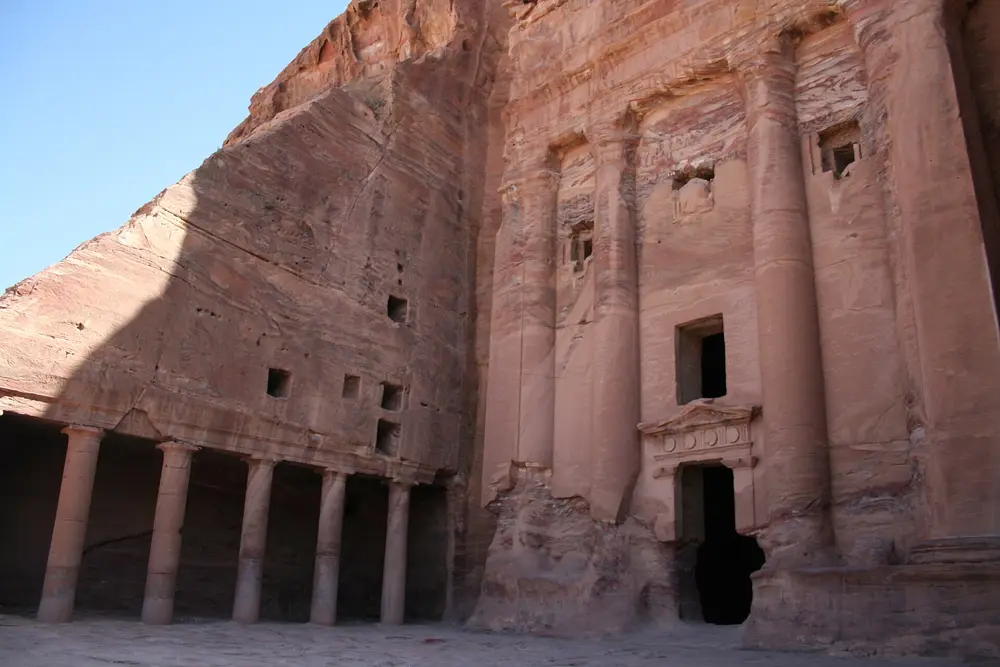
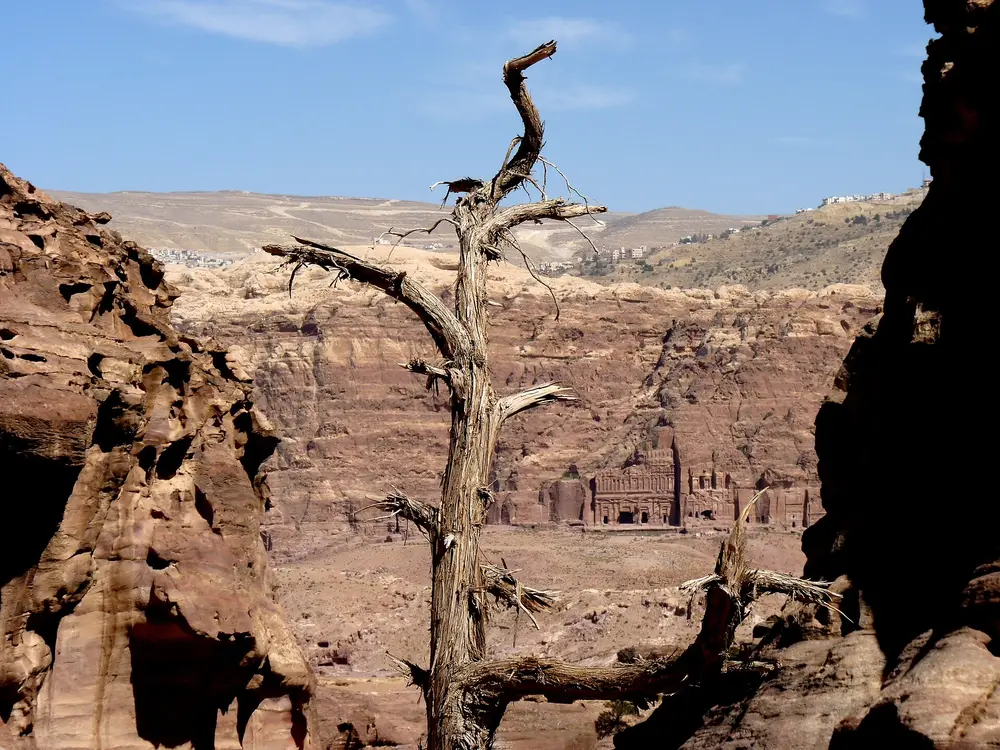
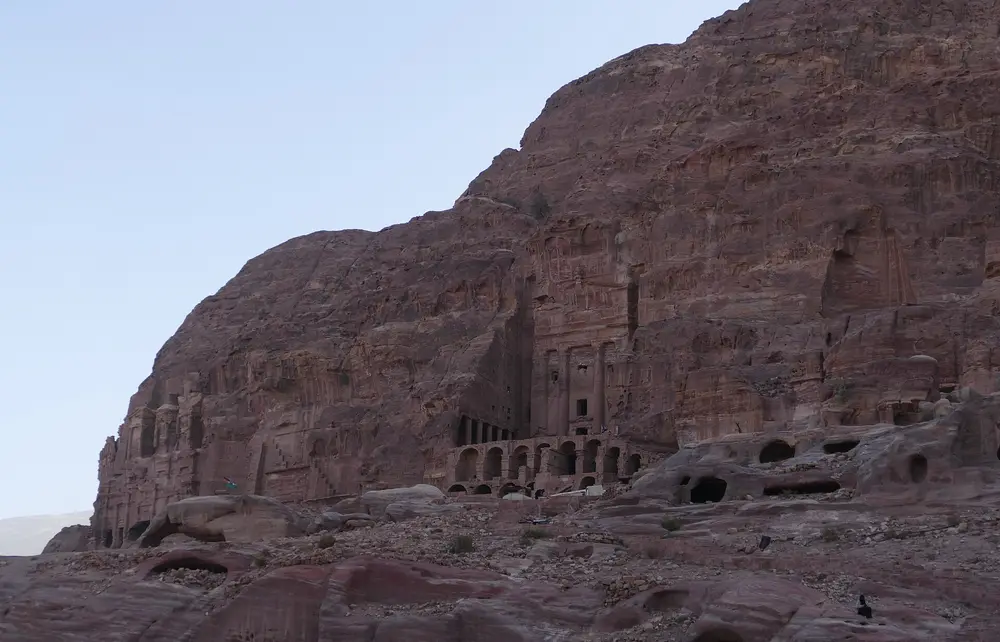
Across the valley the Royal Tombs climb the west face of Jabal al-Khubtha: the Urn Tomb (later used as a church), the multicoloured Silk Tomb, the Corinthian Tomb and the three-storey Palace Tomb. The stairs up to the Urn Tomb take ten minutes and give a fine view back over the city centre.
Colonnaded Street, the Great Temple and Qasr al-Bint
The Colonnaded Street was the city's main avenue, laid out in its Roman form in the 2nd century AD. On its south side the Great Temple complex has been excavated by Brown University since the 1990s; at the western end the Temenos Gate leads to Qasr al-Bint, the most important free-standing Nabataean temple. Nearby the Petra Church preserves 6th-century floor mosaics and is worth a short detour.
This is also where you find the main restaurants and rest areas inside the park.
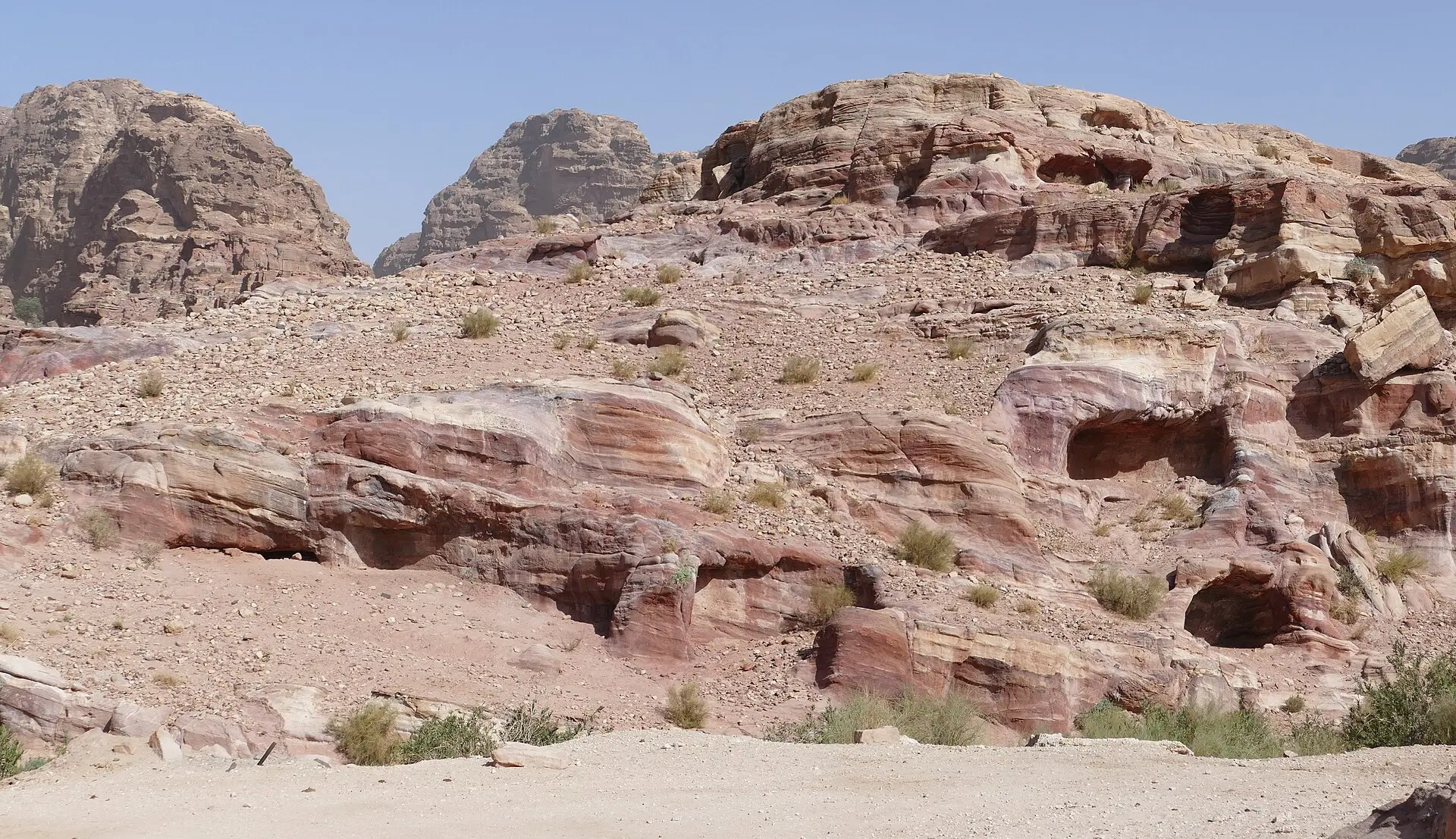
The Monastery (Ad Deir)
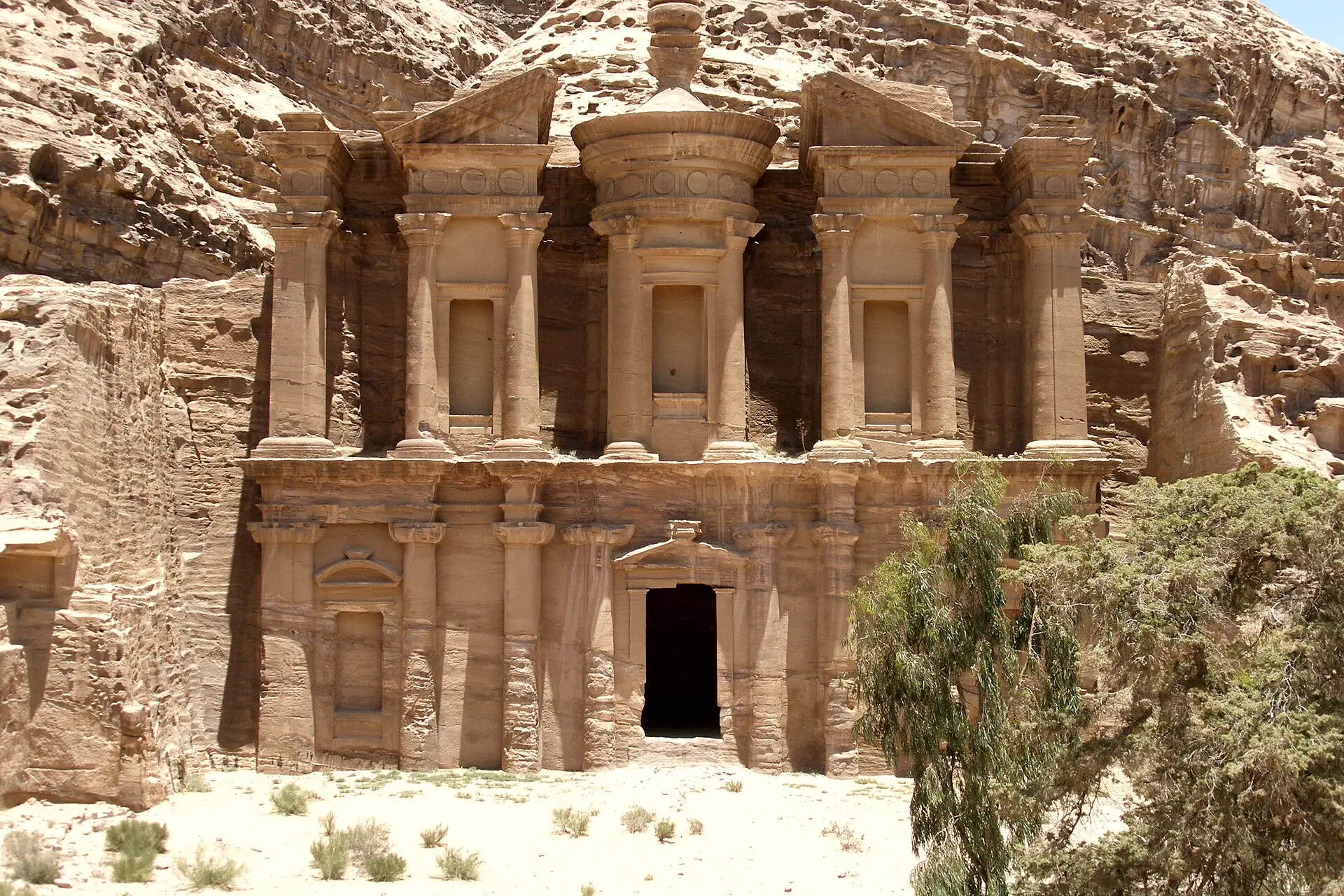
The great climb: about 800 steps cut into the rock lead up from the Basin restaurant to Ad Deir, a facade roughly 47 m wide and 48 m high carved in the 1st century AD, probably as a temple or meeting place for a deified king. Opposite, small teahouses and short paths lead to viewpoints over Wadi Araba and, on clear days, towards Jabal Haroun.
Go early or in the late afternoon; the path faces the sun at midday. Donkeys are offered for the ascent, but the steps are steep and narrow — walking is kinder to you and the animals.
- Basin restaurant → Monastery
- ≈ 45–60 min up, 30–40 min down
- Difficulty
- Moderate to hard (steps, little shade)
- Best light
- Mid to late afternoon
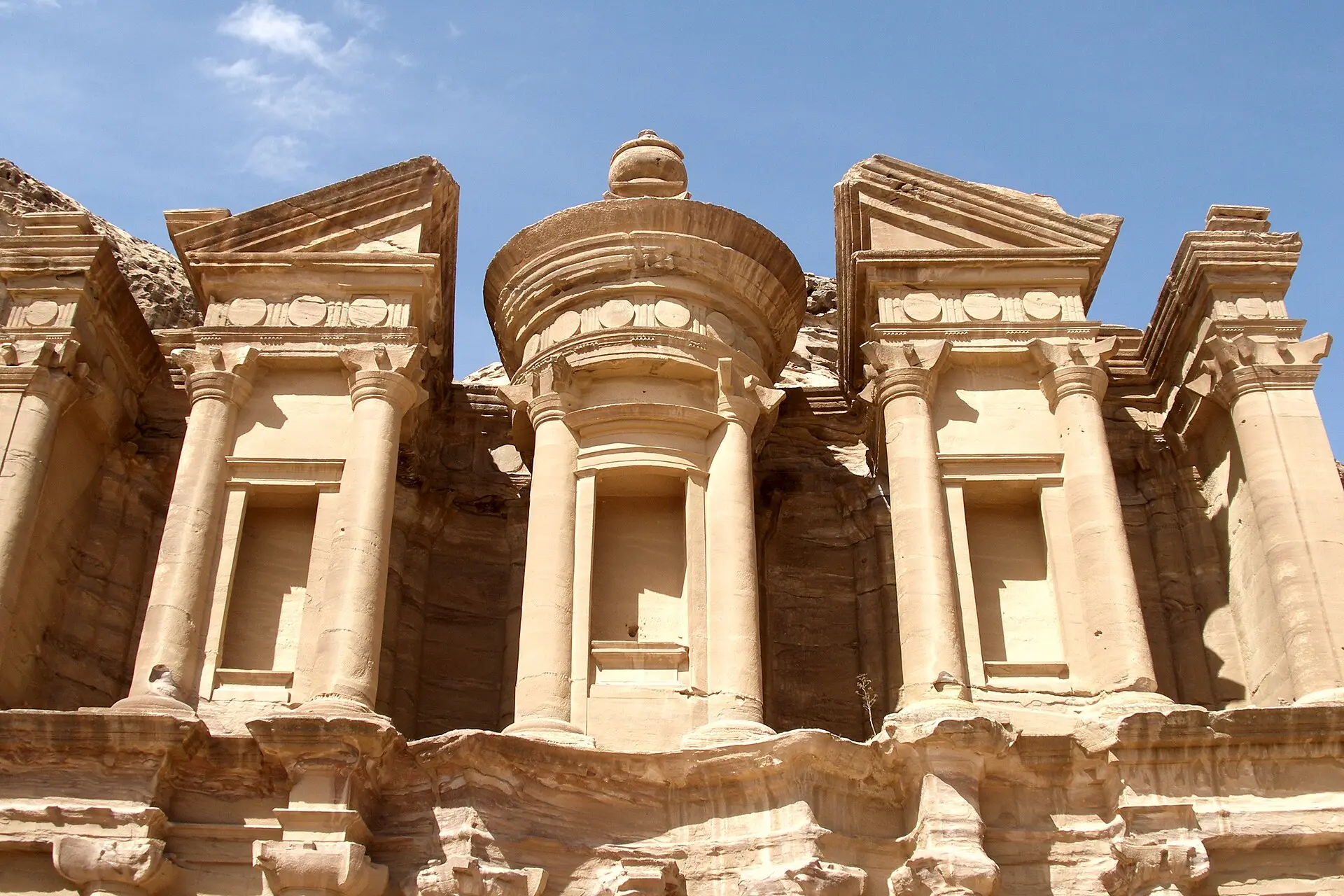
High Place of Sacrifice
Steps start near the Theatre and climb to a ridge-top altar platform with two obelisks and panoramic views over the city. Rather than returning the same way, continue down the far side via the Lion Fountain, the Garden Tomb and the Roman Soldier's Tomb into Wadi Farasa, reaching the Colonnaded Street near Qasr al-Bint — a loop of about 2–3 hours.
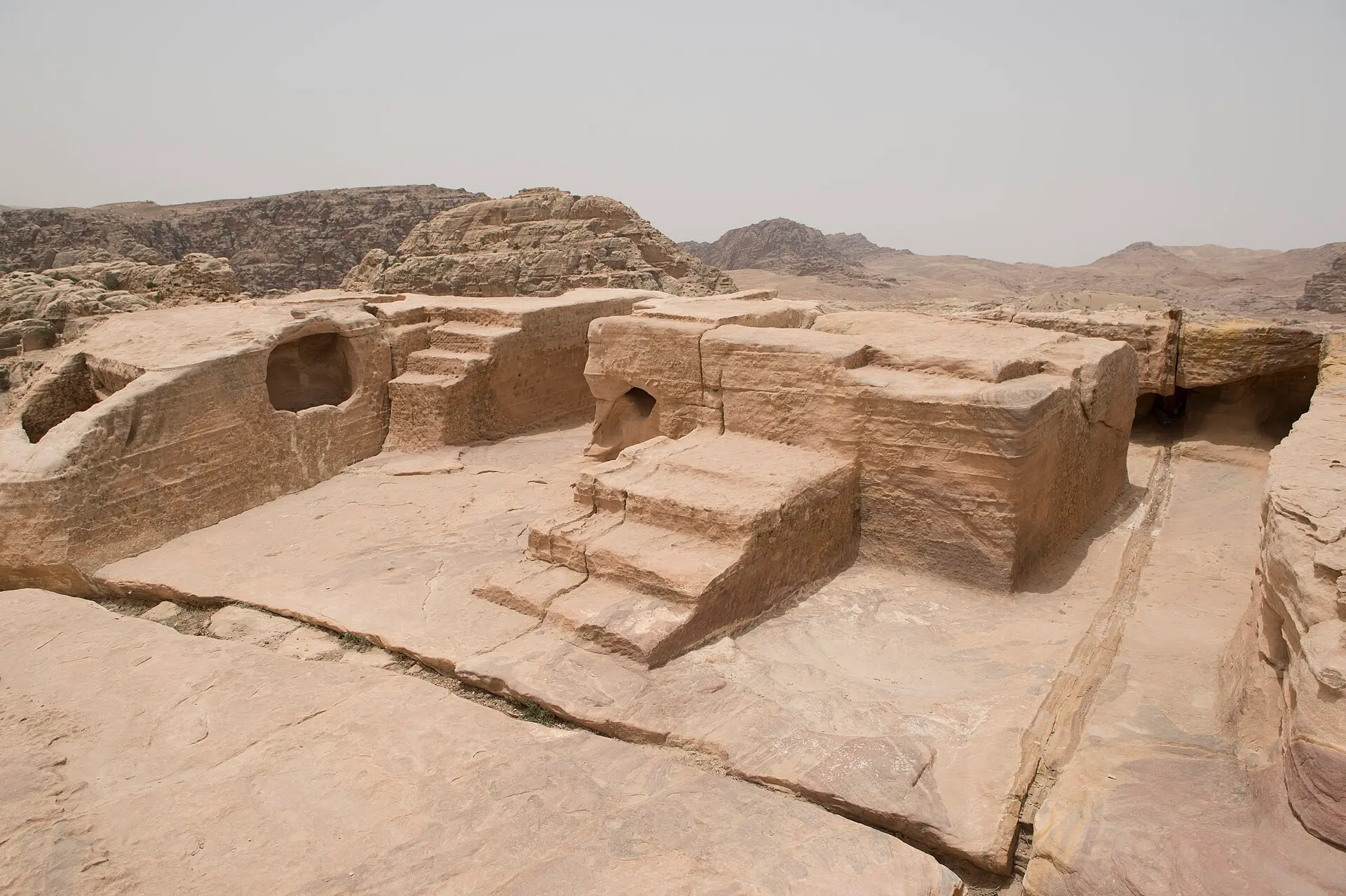
Al-Khubtha Trail: the view over the Treasury
From the Royal Tombs a stepped trail climbs Jabal al-Khubtha to a ledge looking straight down on the Treasury — the famous postcard view. It takes 45–75 minutes up. Teahouse owners at the top sometimes ask a small fee to use their viewpoint. Morning light is best on the Treasury from above.
Little Petra and the 'back door' trail
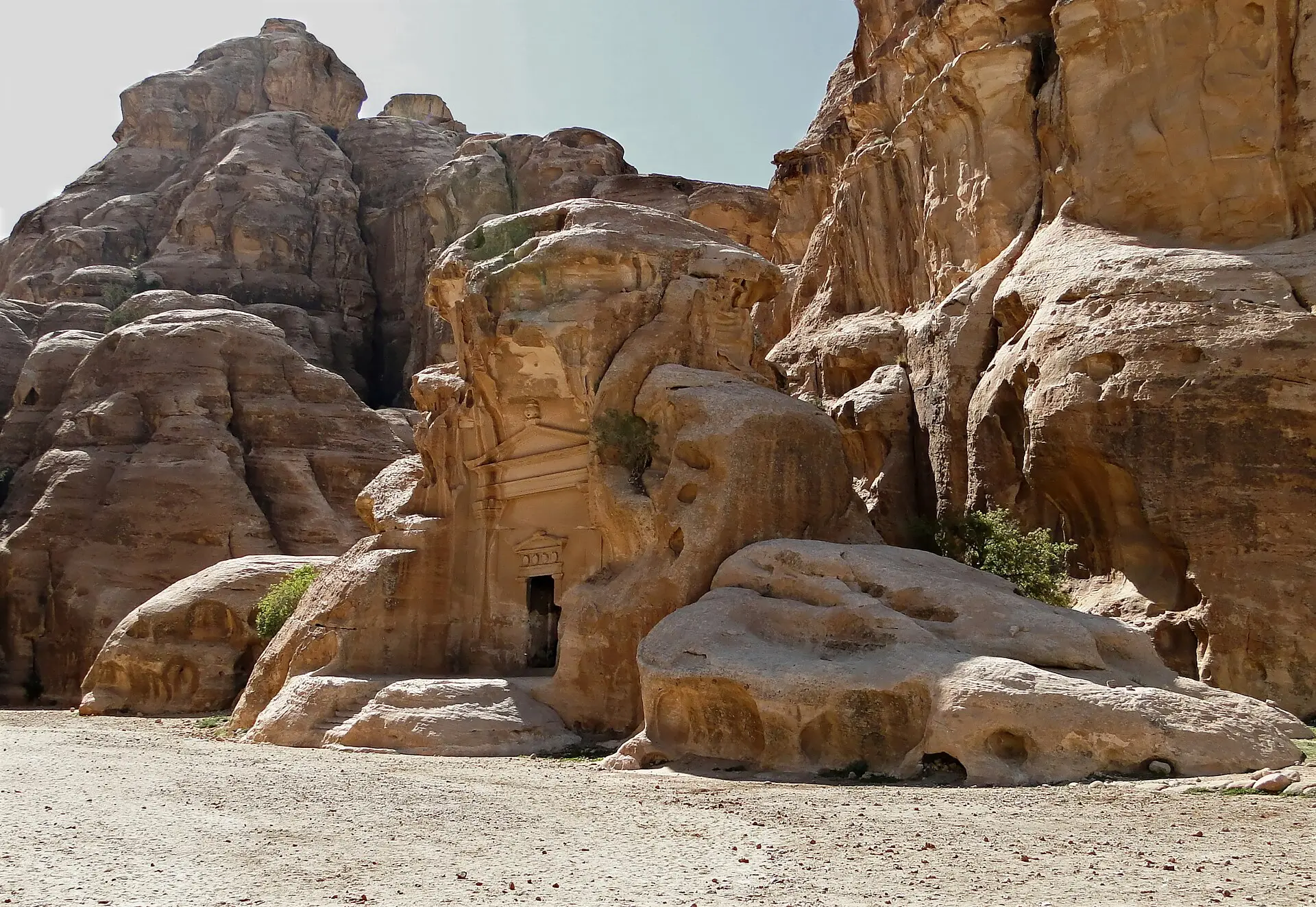
Siq al-Barid, 'the cold canyon', is about 9 km north of Wadi Musa. A short gorge leads past houses, cisterns and triclinia (dining halls); in one biclinium a fragment of 1st-century painted ceiling with vines, birds and figures survives. Entry is free.
From near Little Petra a trail of about 2–3 hours leads across the plateau and down to the Monastery from behind. Walkers should have a valid Petra ticket and are often asked to hire a local guide; check at the Visitor Centre first.
Petra Museum and Petra Kitchen
The Petra Museum by the Visitor Centre (opened 2019) displays finds from the site with good explanations of Nabataean life, water engineering and trade — an excellent first or last hour. In Wadi Musa, Petra Kitchen runs evening cooking classes where you prepare and eat a Jordanian dinner (book ahead).
Suggested plans
| Plan | Morning | Afternoon | Evening |
|---|---|---|---|
| 1 day | 6 AM Siq → Treasury → Royal Tombs | Colonnaded Street → Monastery → back | Petra by Night (Sun–Thu) |
| 2 days | Day 2: High Place of Sacrifice loop | Al-Khubtha viewpoint, then Little Petra | Petra Kitchen class |
| 3 days | Day 3: Little Petra → Monastery back trail | Rest or Jabal Haroun (guide advised) | Sunset at the Monastery viewpoints |
Petra: 3-hour private guided tour with hotel pickup
A licensed guide for the main valley from your Wadi Musa hotel: the Siq, the Treasury and the Royal Tombs, with the stories behind them.
Check availabilityBook via GetYourGuide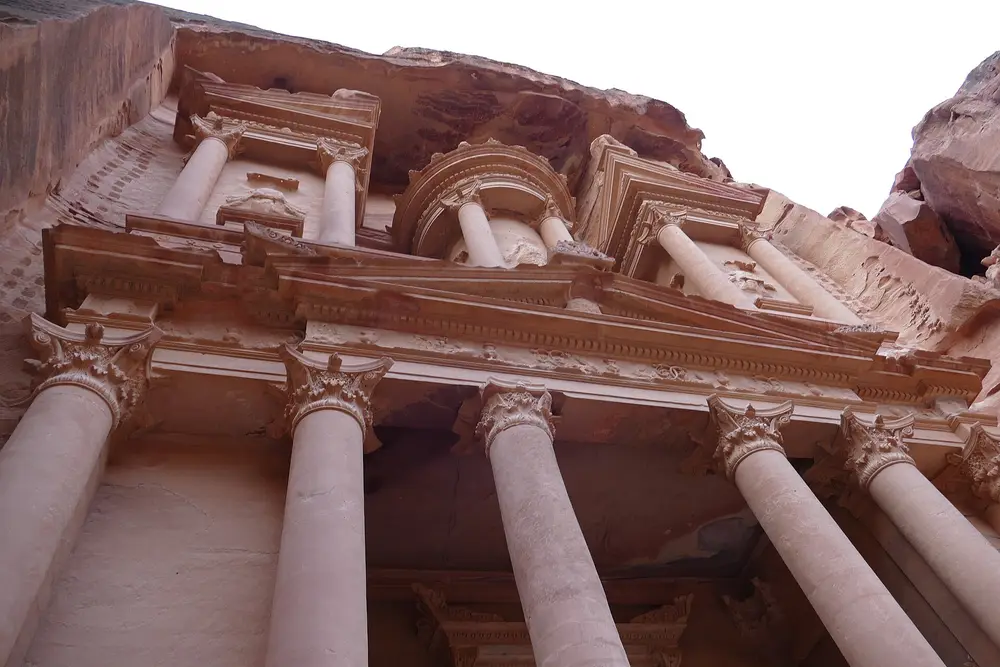
From Amman: private Petra day trip with guide
Private transport plus a guide inside Petra — useful if you have only one day and want context.
Check availabilityBook via GetYourGuideTour listings are on GetYourGuide. Prices, times and cancellation terms are shown live on each listing and can change; JordanTravel.com may earn a commission at no extra cost to you.
Jabal Haroun (Aaron's Tomb)
On the highest peak in the Petra area, a small white shrine marks the traditional tomb of Aaron, brother of Moses, venerated by Muslims, Jews and Christians. The return hike from the city centre takes 6–8 hours and is best done with a local guide; you can see the shrine from the Monastery viewpoints and from Wadi Musa at sunset.
Water and engineering
Look out across the city for the Nabataeans' greatest achievement: water. Channels and clay pipes in the Siq carried spring water into the city; dams diverted floodwater; hundreds of cisterns stored winter rain. This system supported a population estimated in the tens of thousands in a desert valley — and explains why the city could thrive as a caravan hub.
Frequently asked questions
How long is the walk to the Monastery?
About 4.5 km from the Visitor Centre to the Basin restaurant and then roughly 800 steps up — plan 4–5 hours for the return trip including stops.
Is Little Petra worth visiting?
Yes, especially as a quiet extra: it is free, takes about an hour and has a rare painted Nabataean ceiling.
Do I need a guide in Petra?
Not for the main trails, which are clear. A guide adds context in the first few hours, and is advised or required for some remote routes.
Sources and official information
Facts were checked against these official sources in November 2026. Opening hours, prices and timetables change, so confirm before you go.
JordanTravel.com is an independent guide, not the official site of the Jordan Tourism Board, the Government of Jordan or any operator. Some links are affiliate links: tours go to GetYourGuide and hotels go to Booking.com, and we may earn a commission at no extra cost to you.